The HU: A phenomenon from Mongolia
The group has become an international sensation by combining Mongolian musical traditions with modern rock and metal. Their success has introduced millions of listeners to the distinctive sound of Mongolian throat singing and traditional instruments, proving that music rooted in a specific cultural heritage can cross geographical and linguistic boundaries. The HU perform primarily in Mongolian, so much of the audience joined in through energy and rhythm rather than lyrics. While The Hu are not exactly the heavy metal pioneers from Mongolia, they are the ones which exploded globally and topped Billboard charts.
Roughly 3,000 fans packed the Palladium’s main floor; the gallery was closed off. The band has grown steadily in venue size since their first Cologne concert at the Luxor, moving on to Die Kantine, the Live Music Hall, and now the Palladium.
System Of A Down’s “Chop Suey!” blasted from the speakers as the last warm-up song of the stage-reset intermission, then the band walked on.
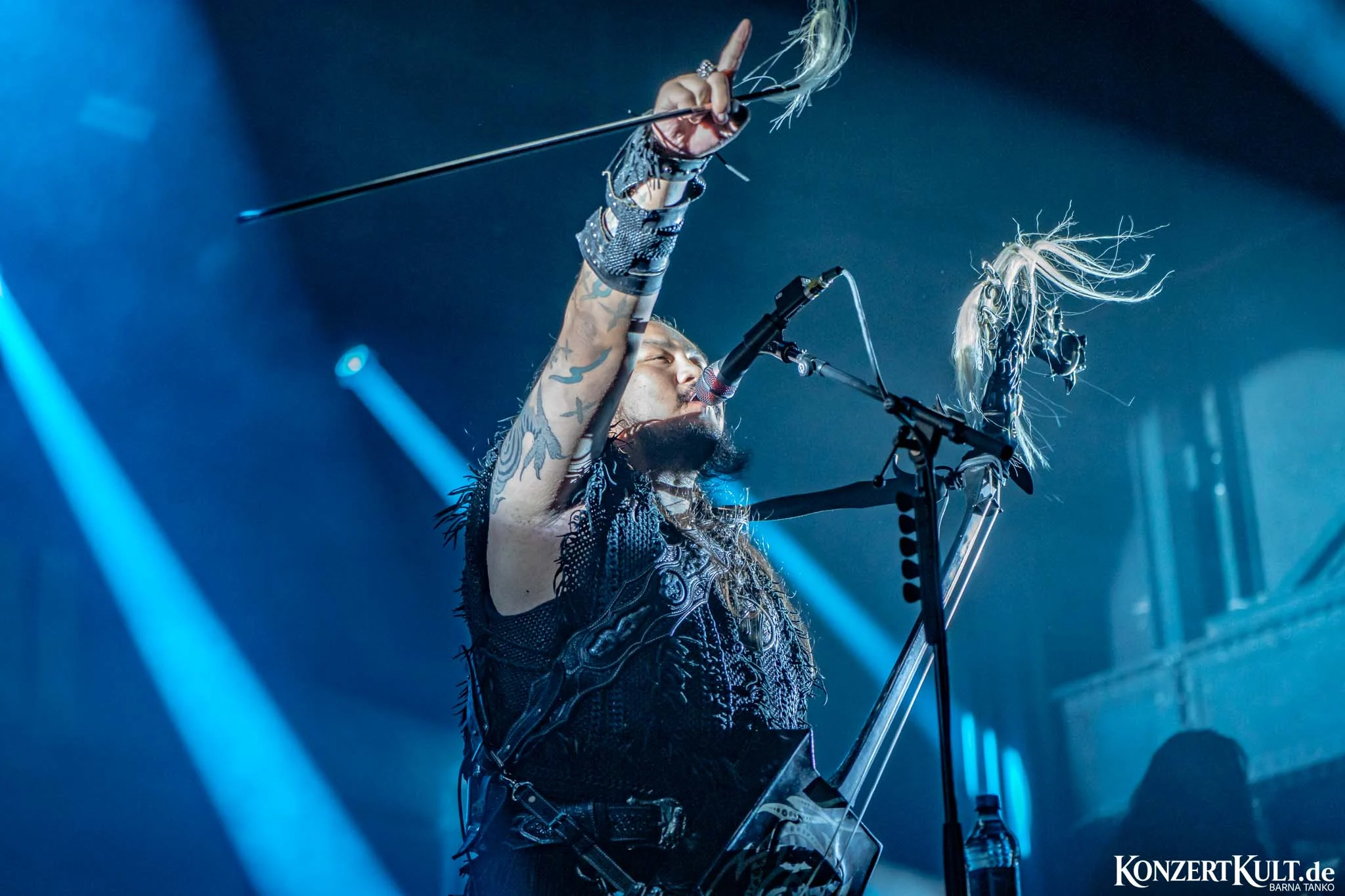
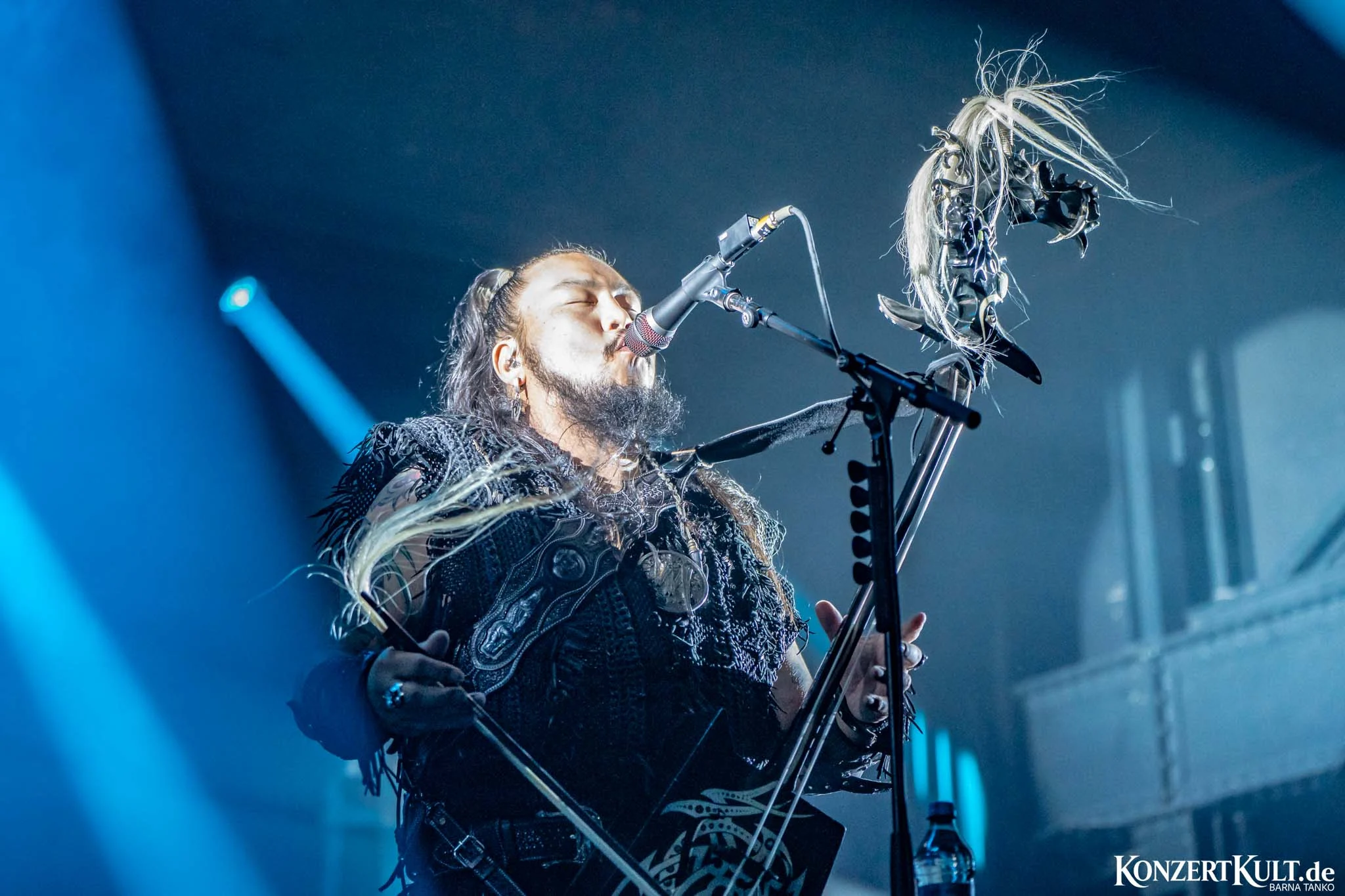
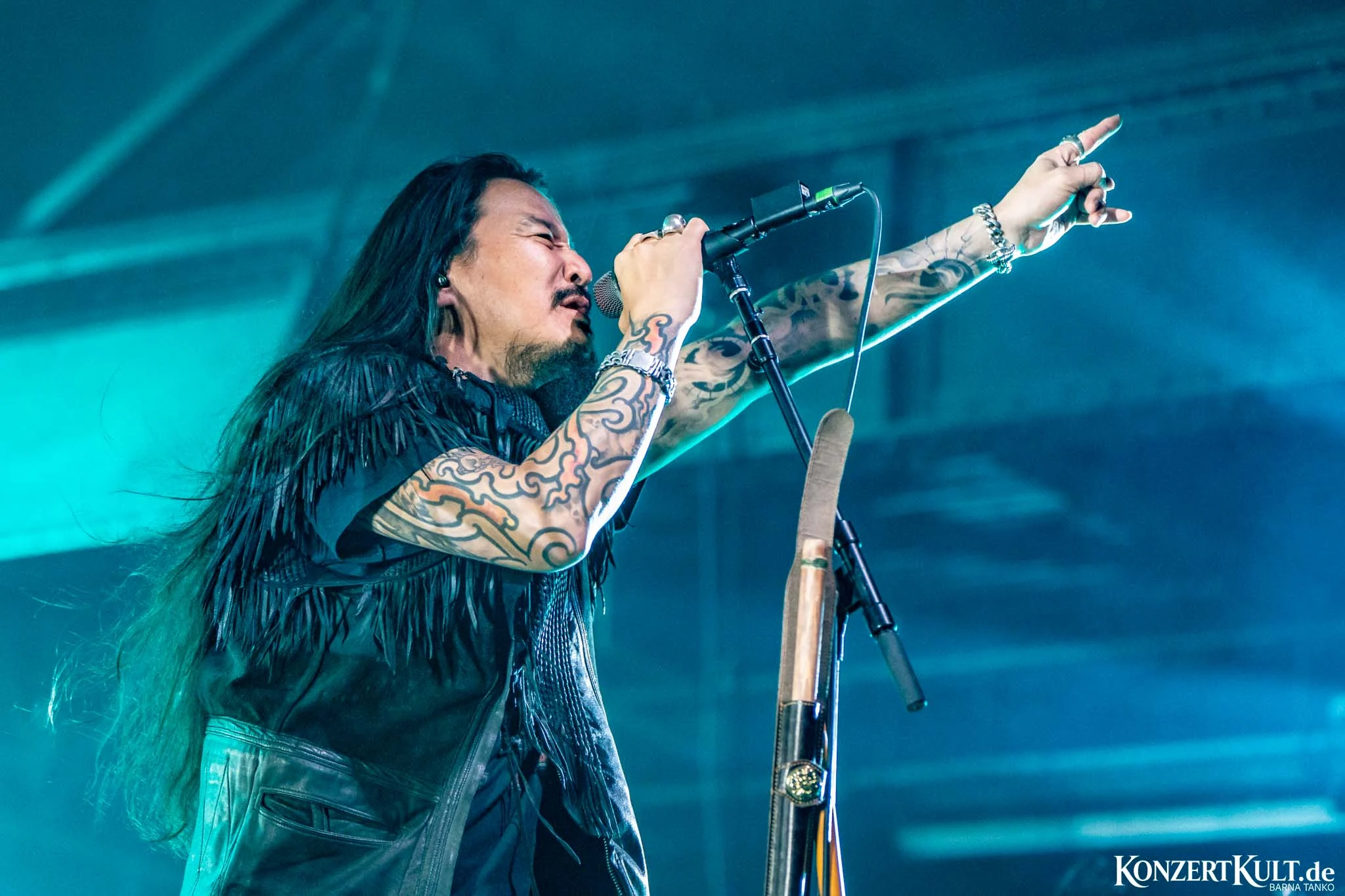
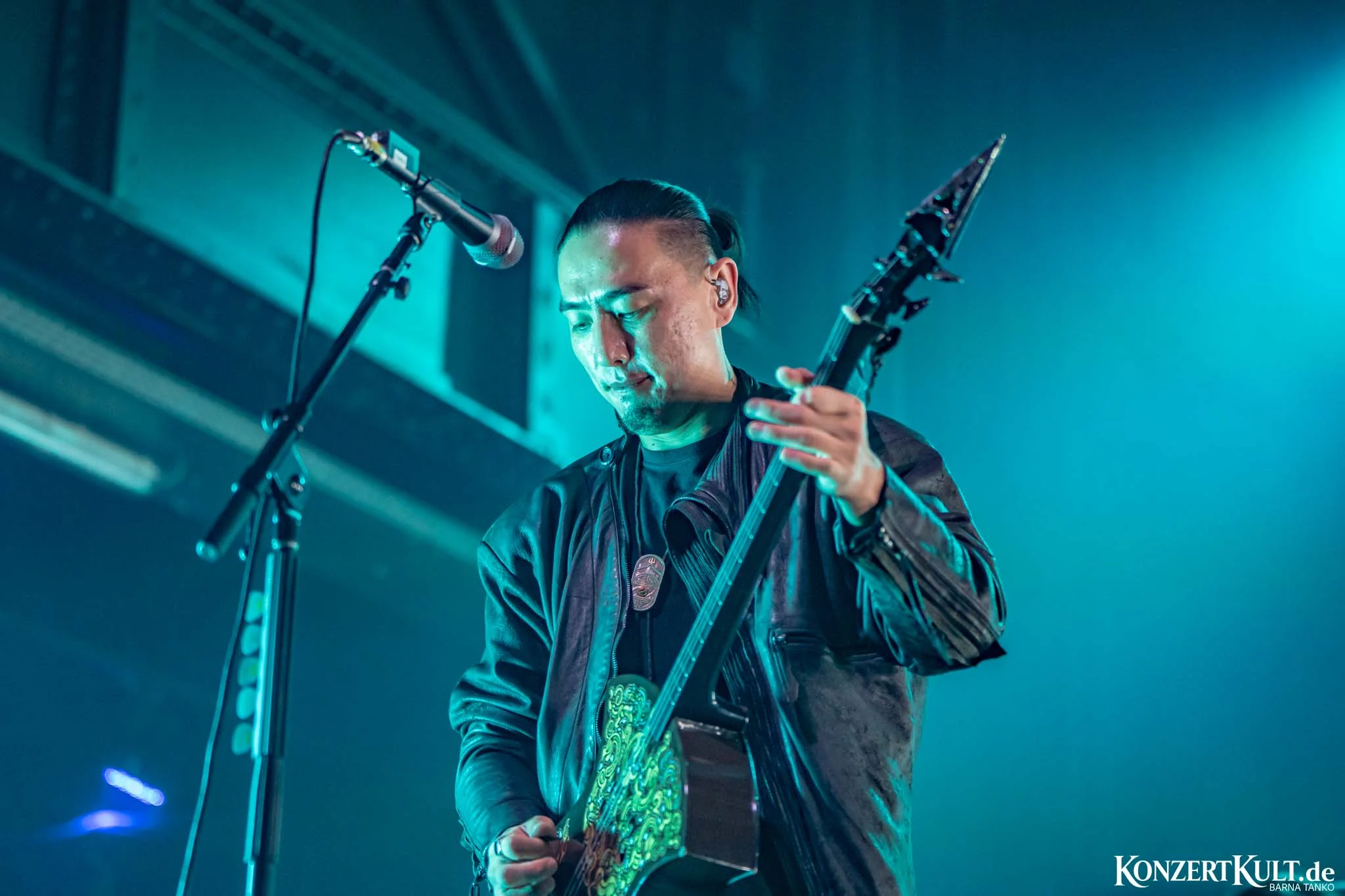
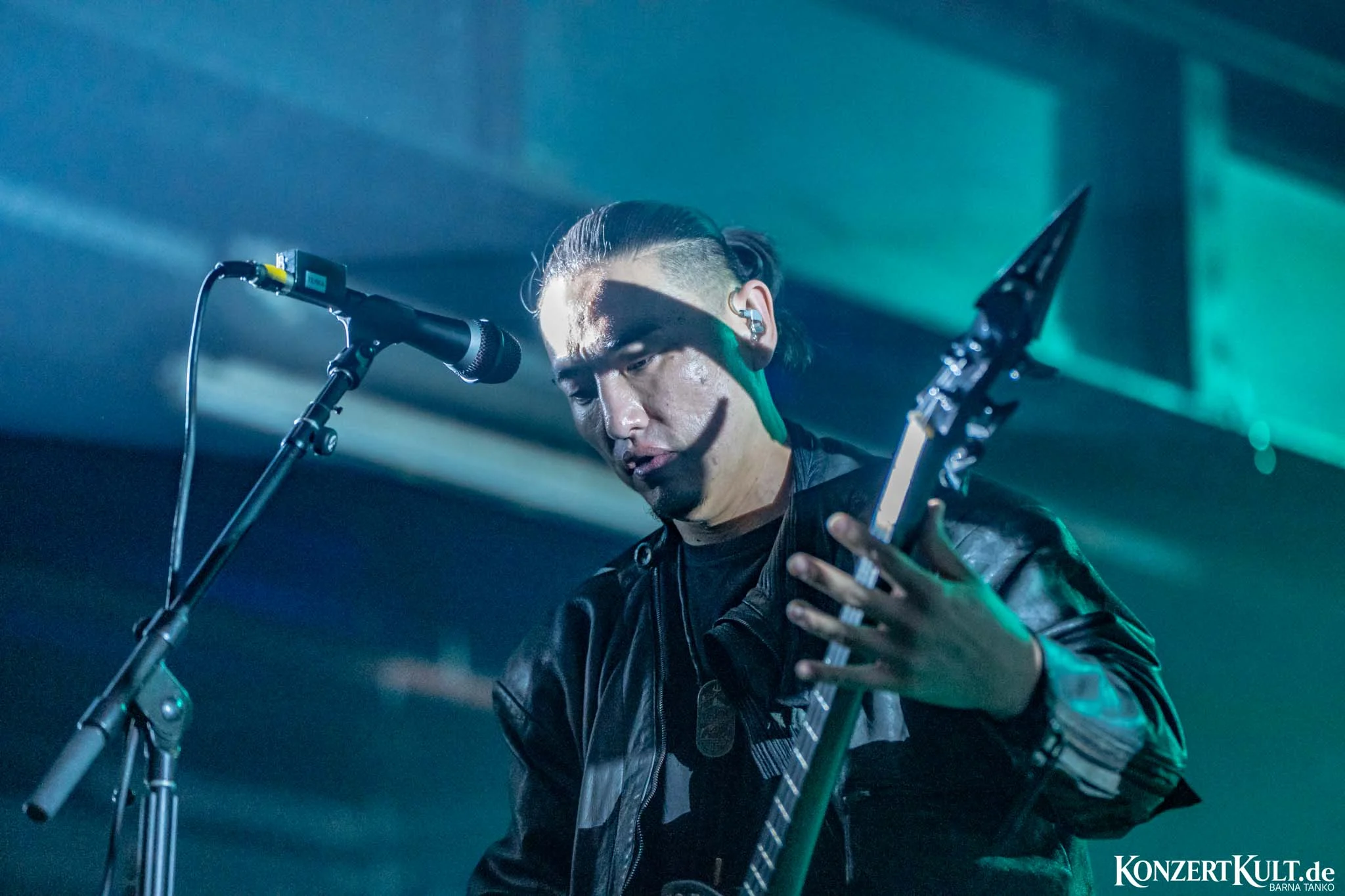
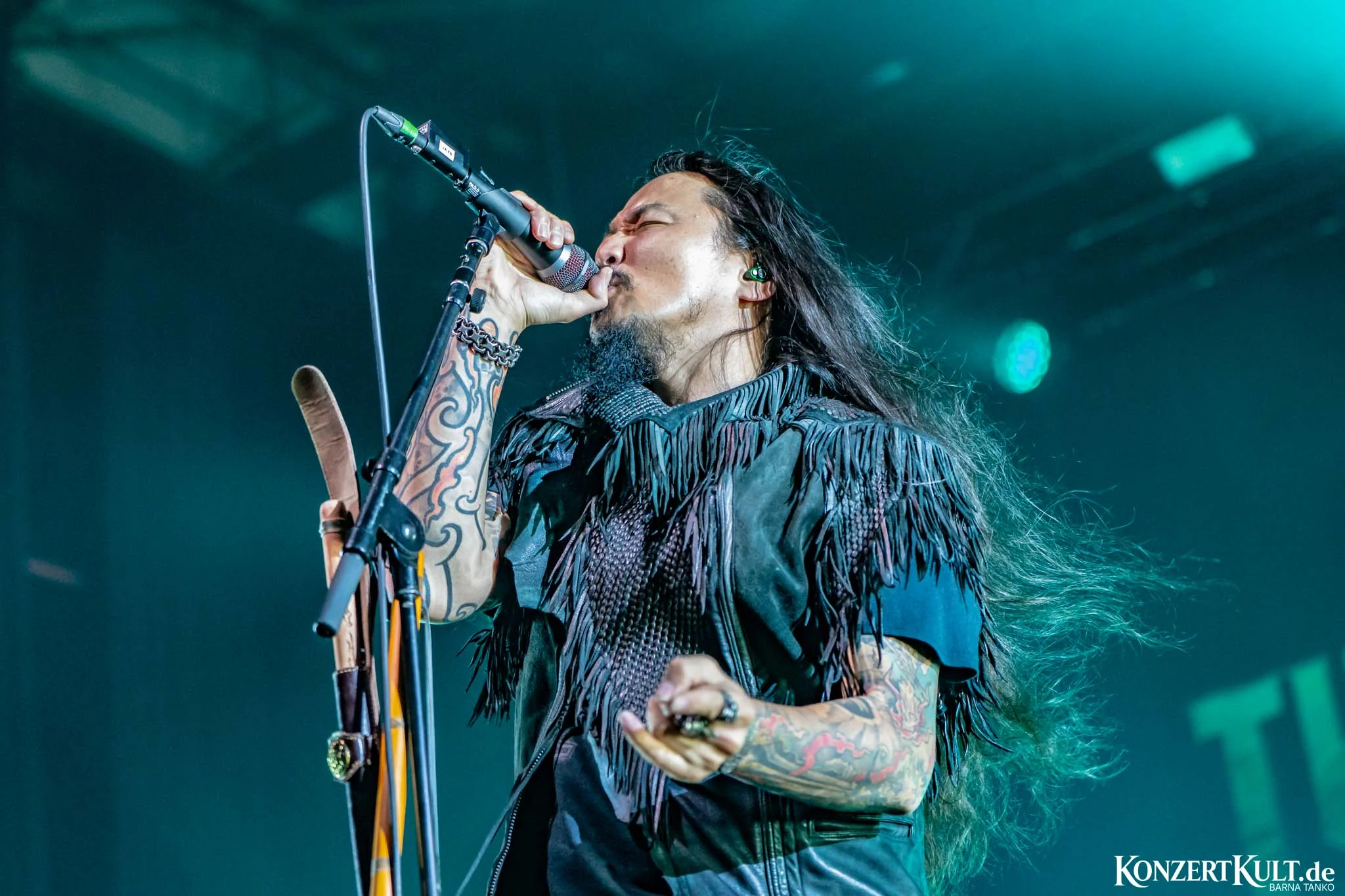
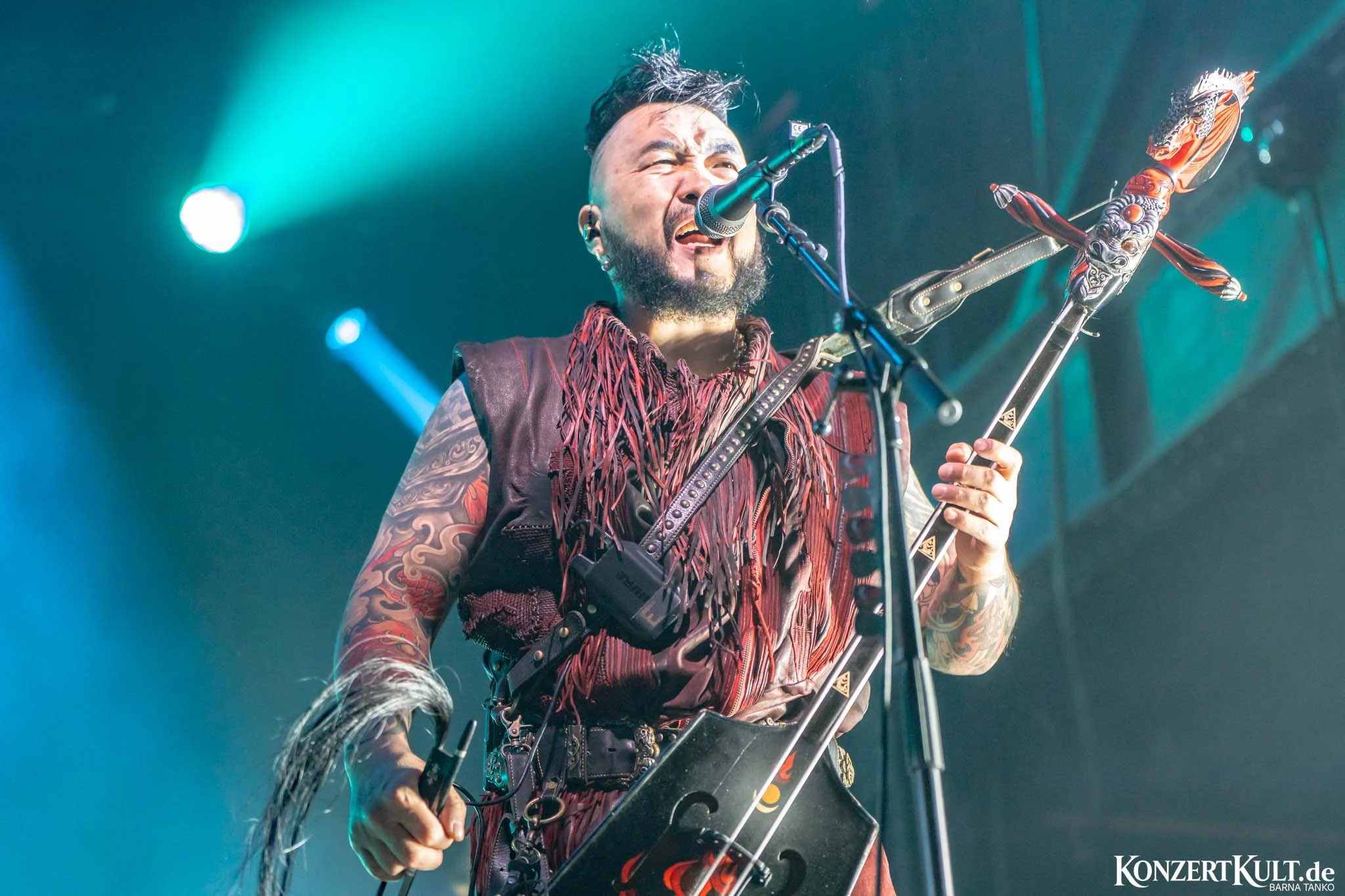
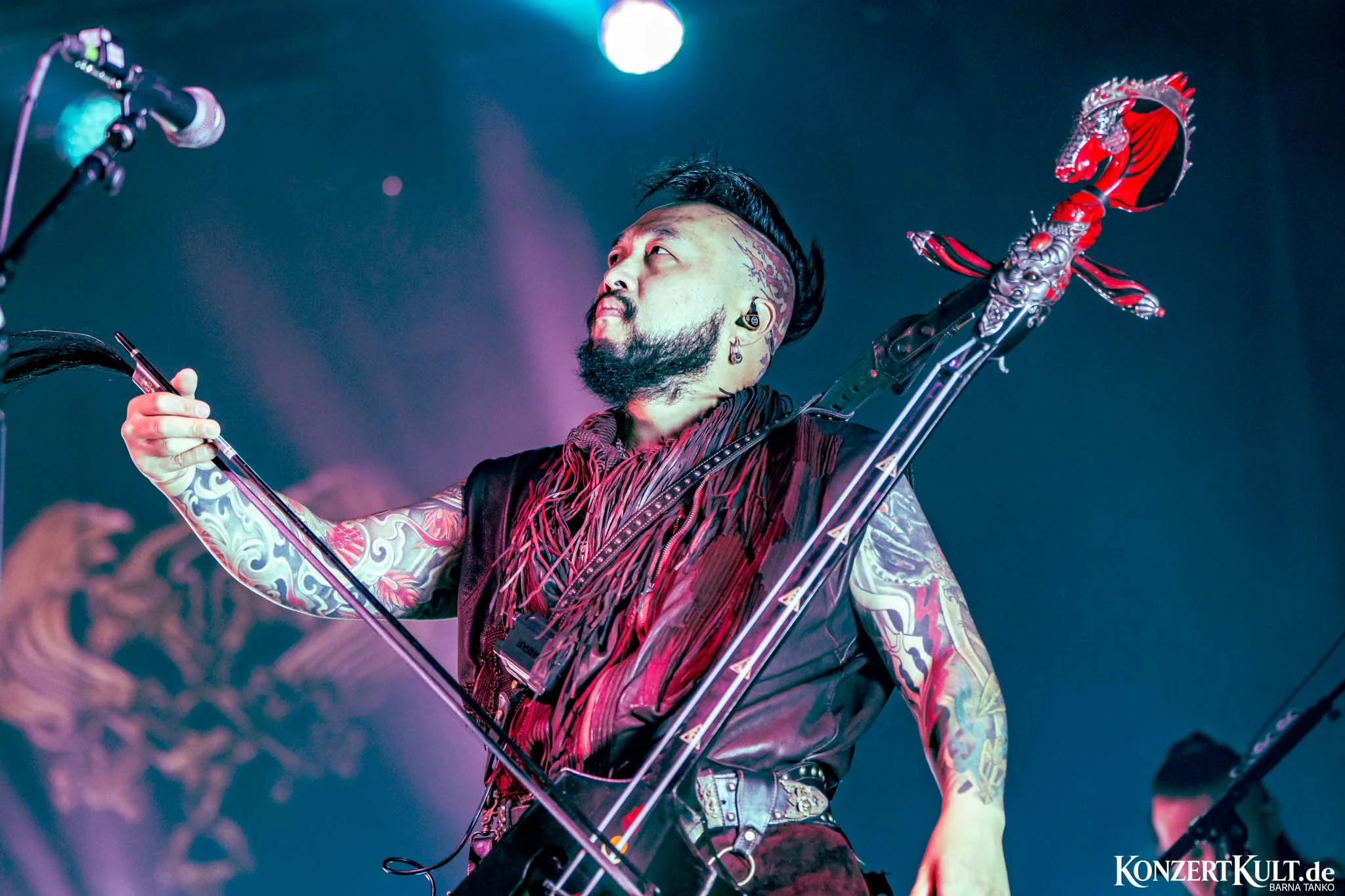
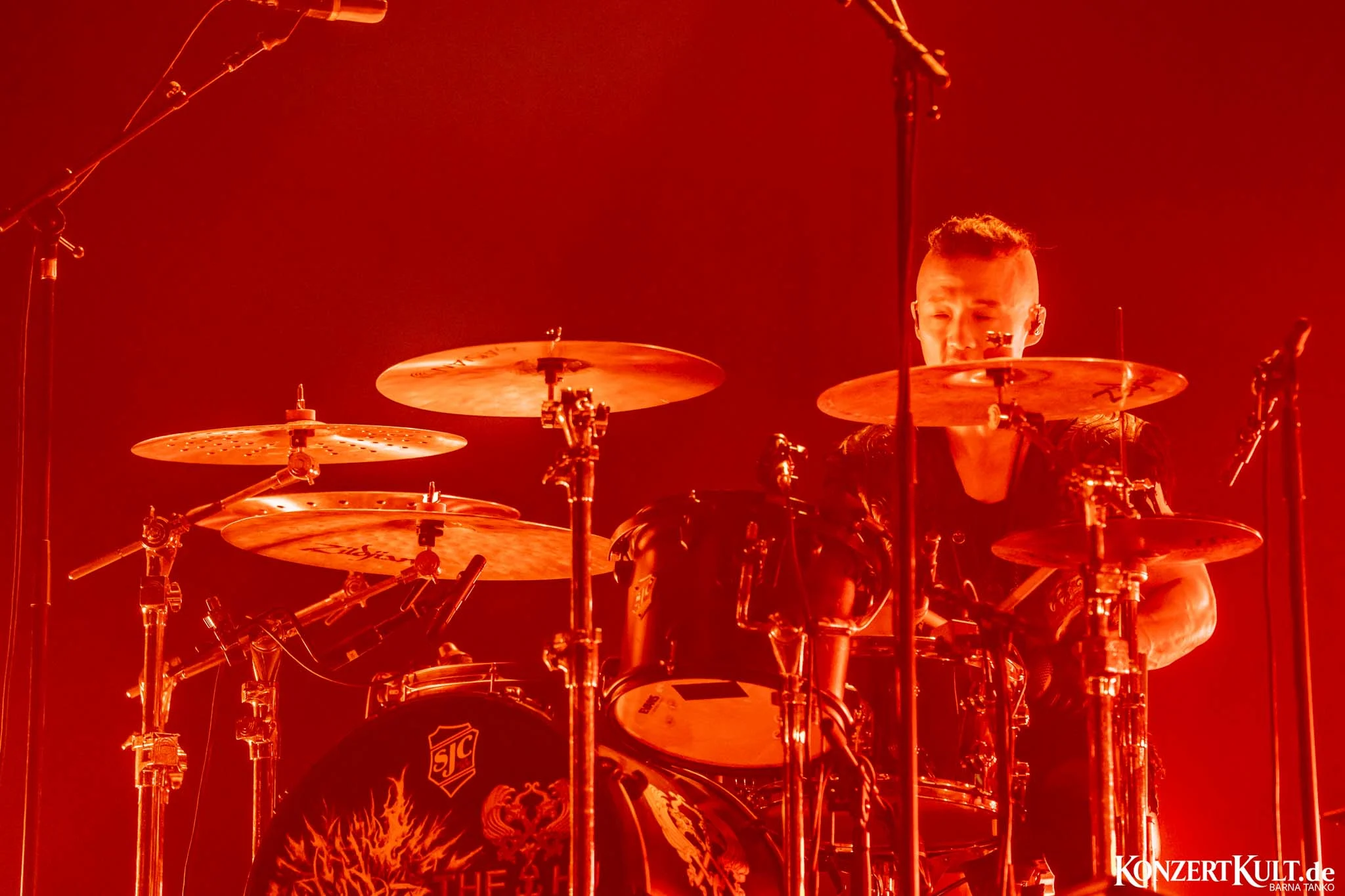
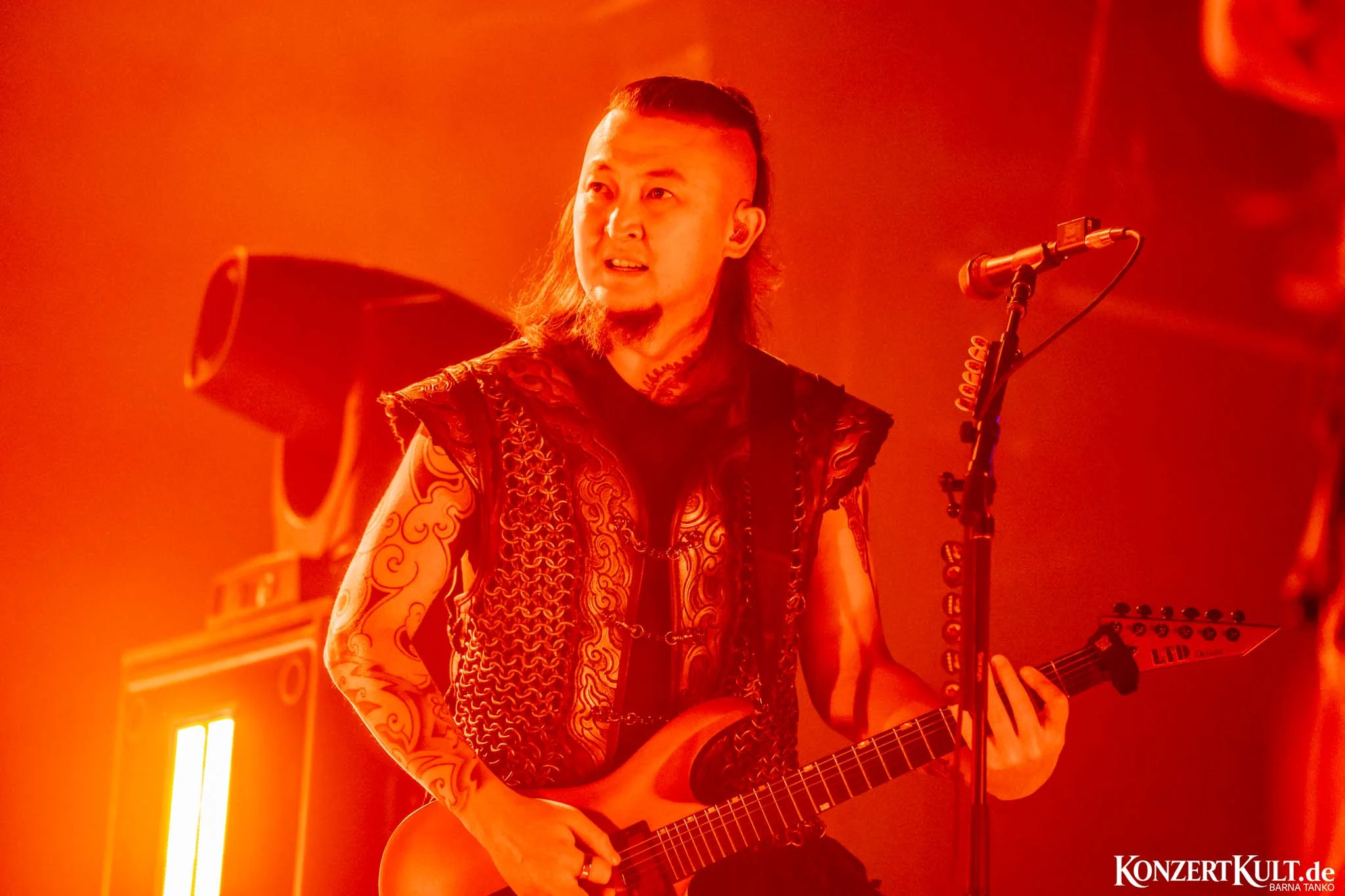
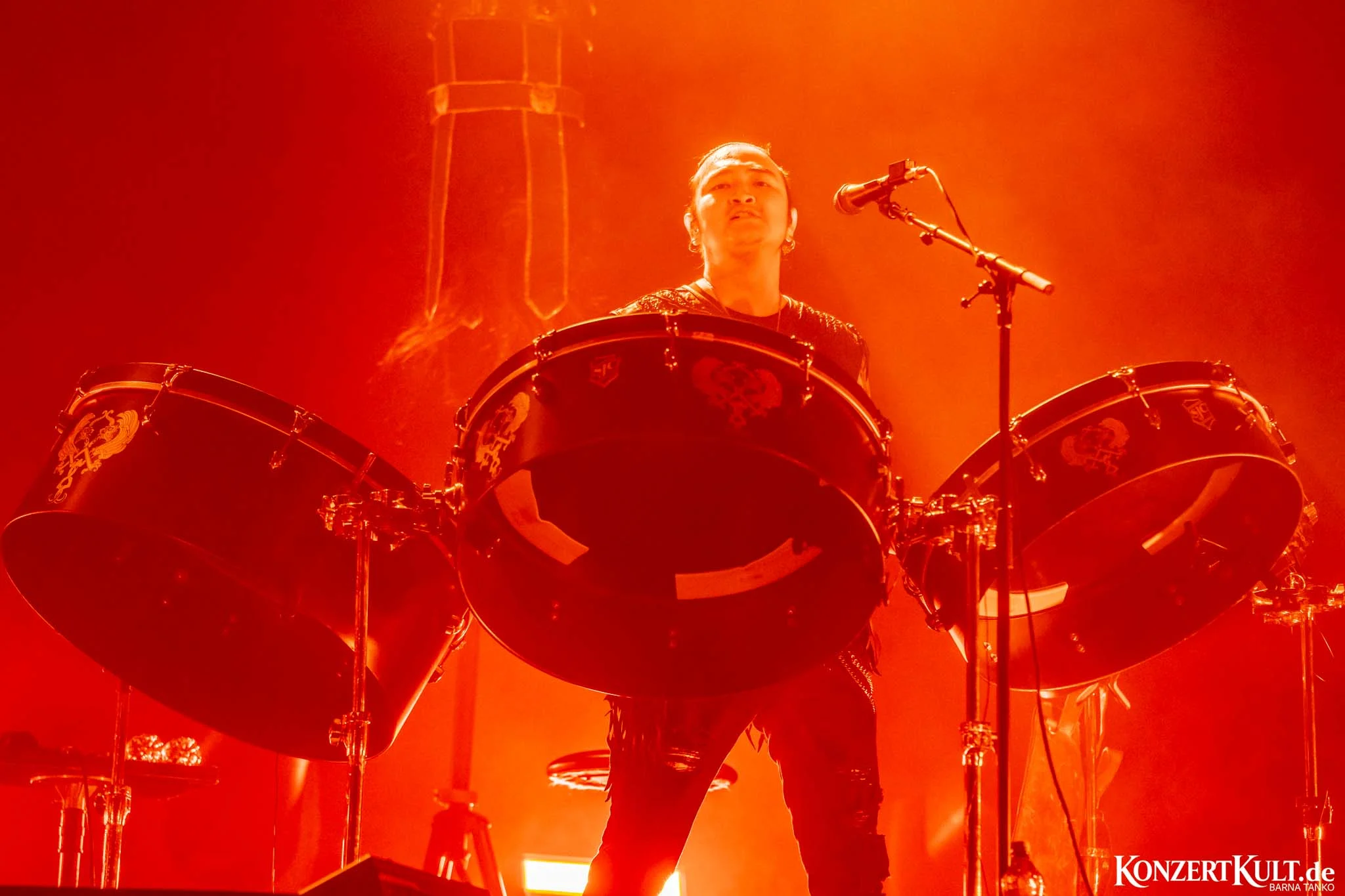
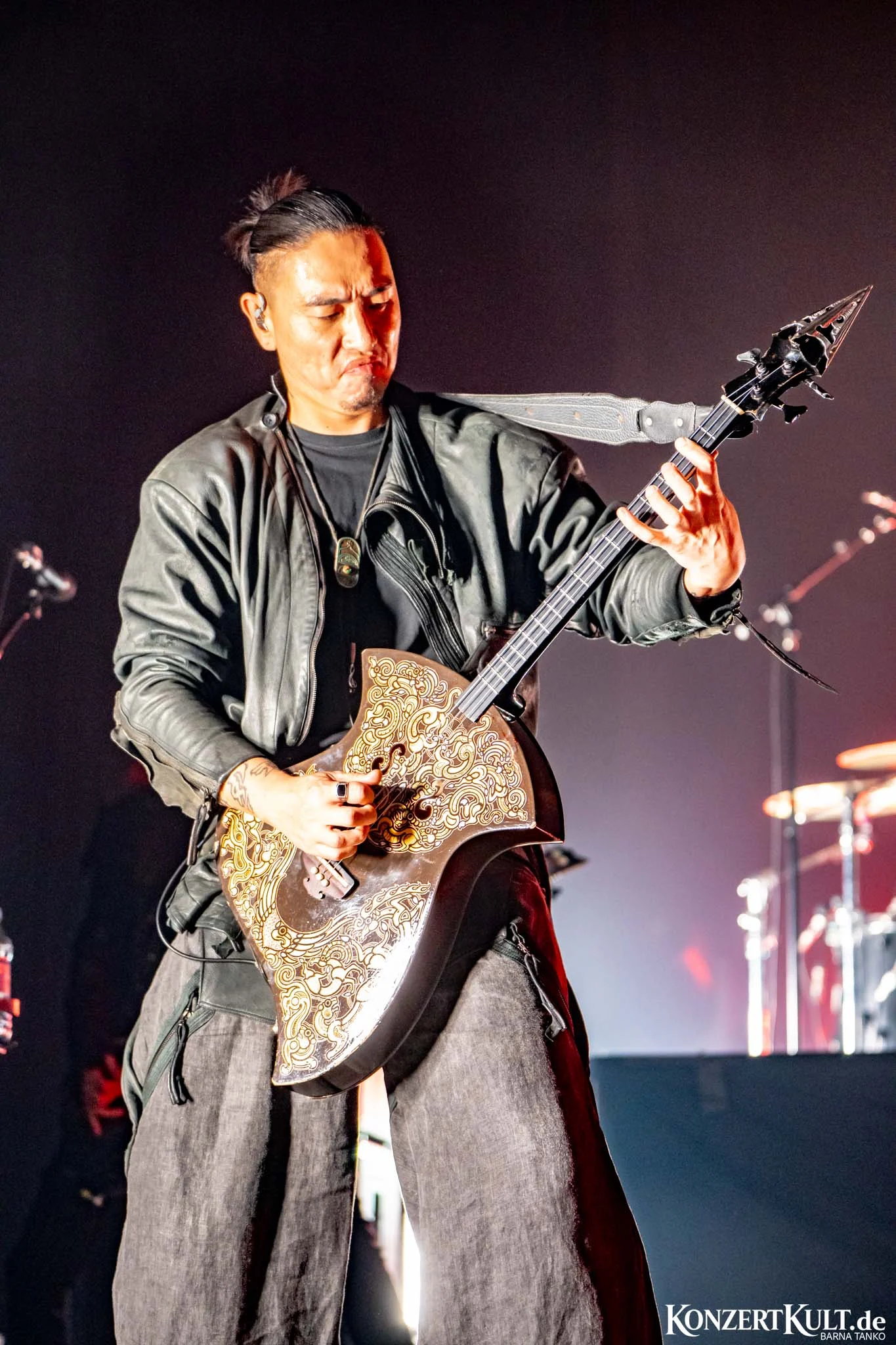
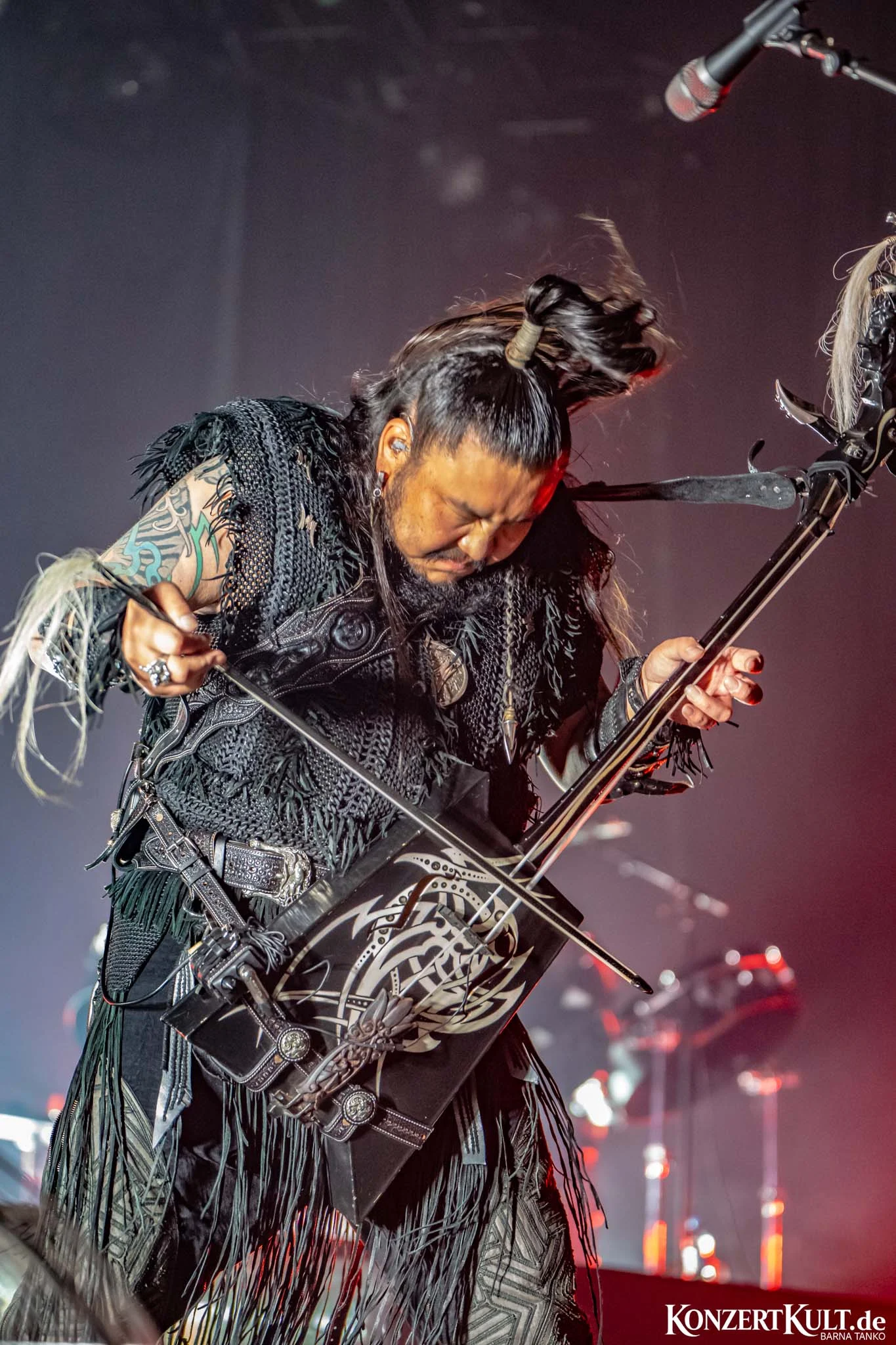
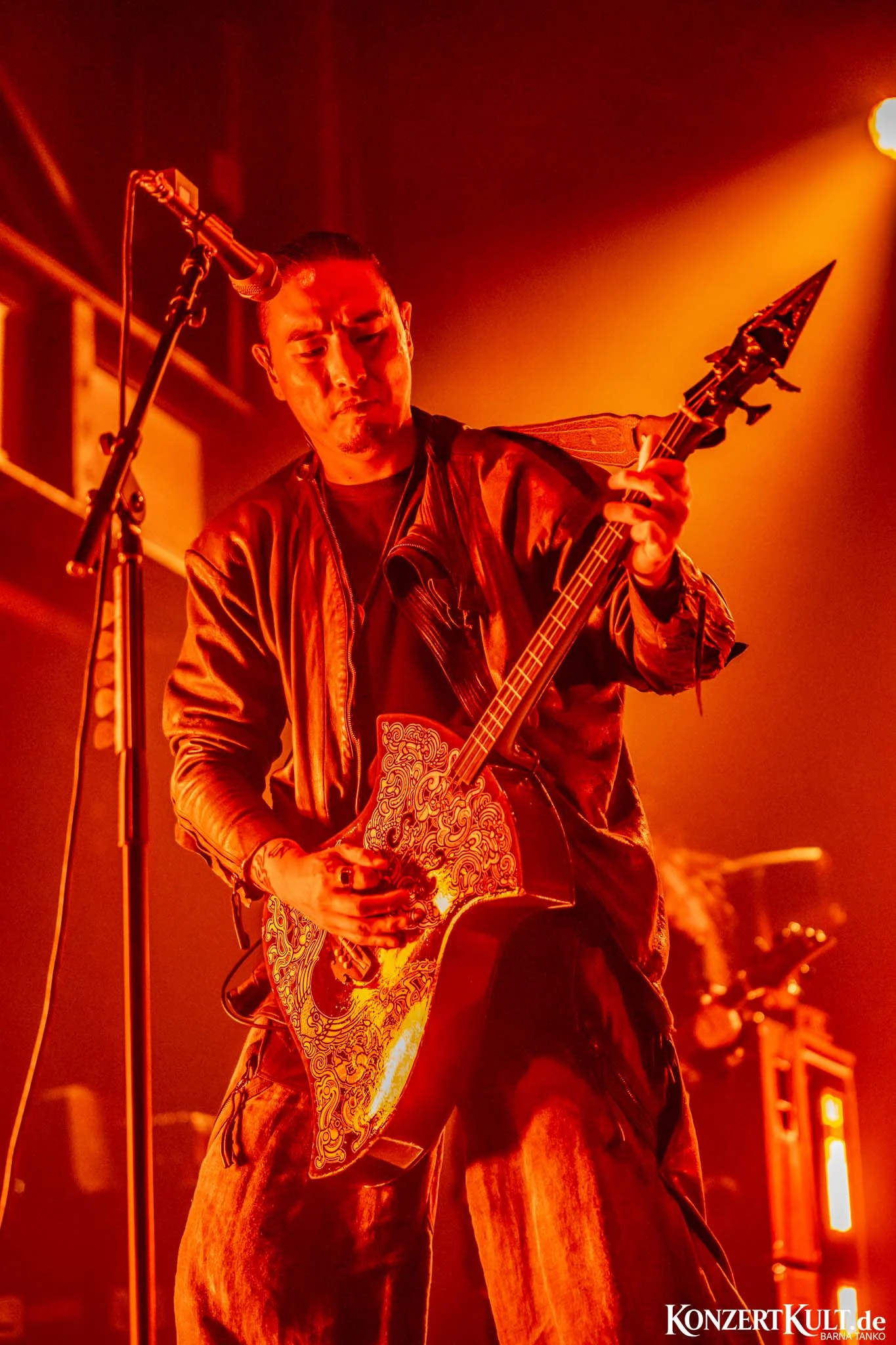
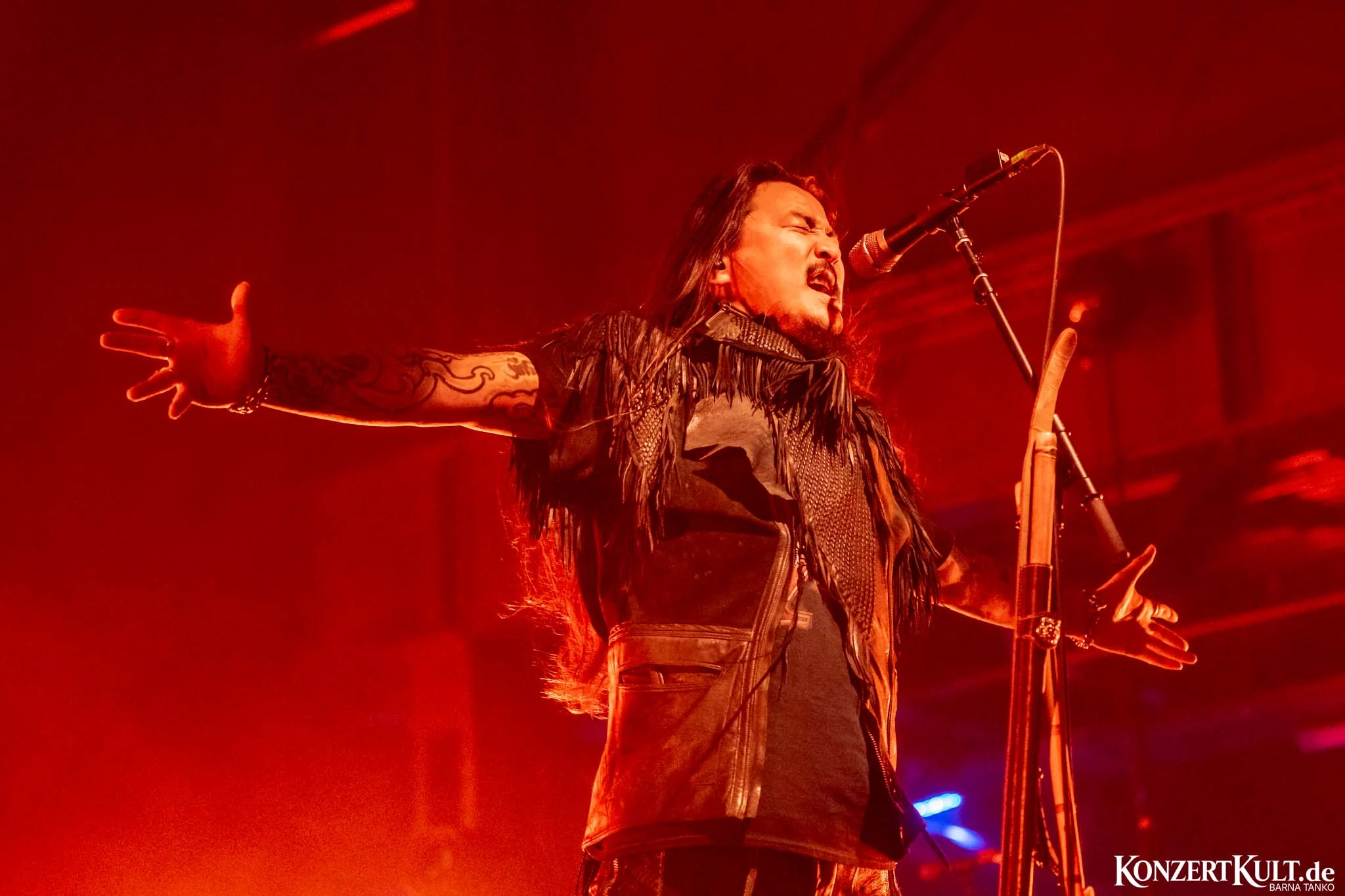
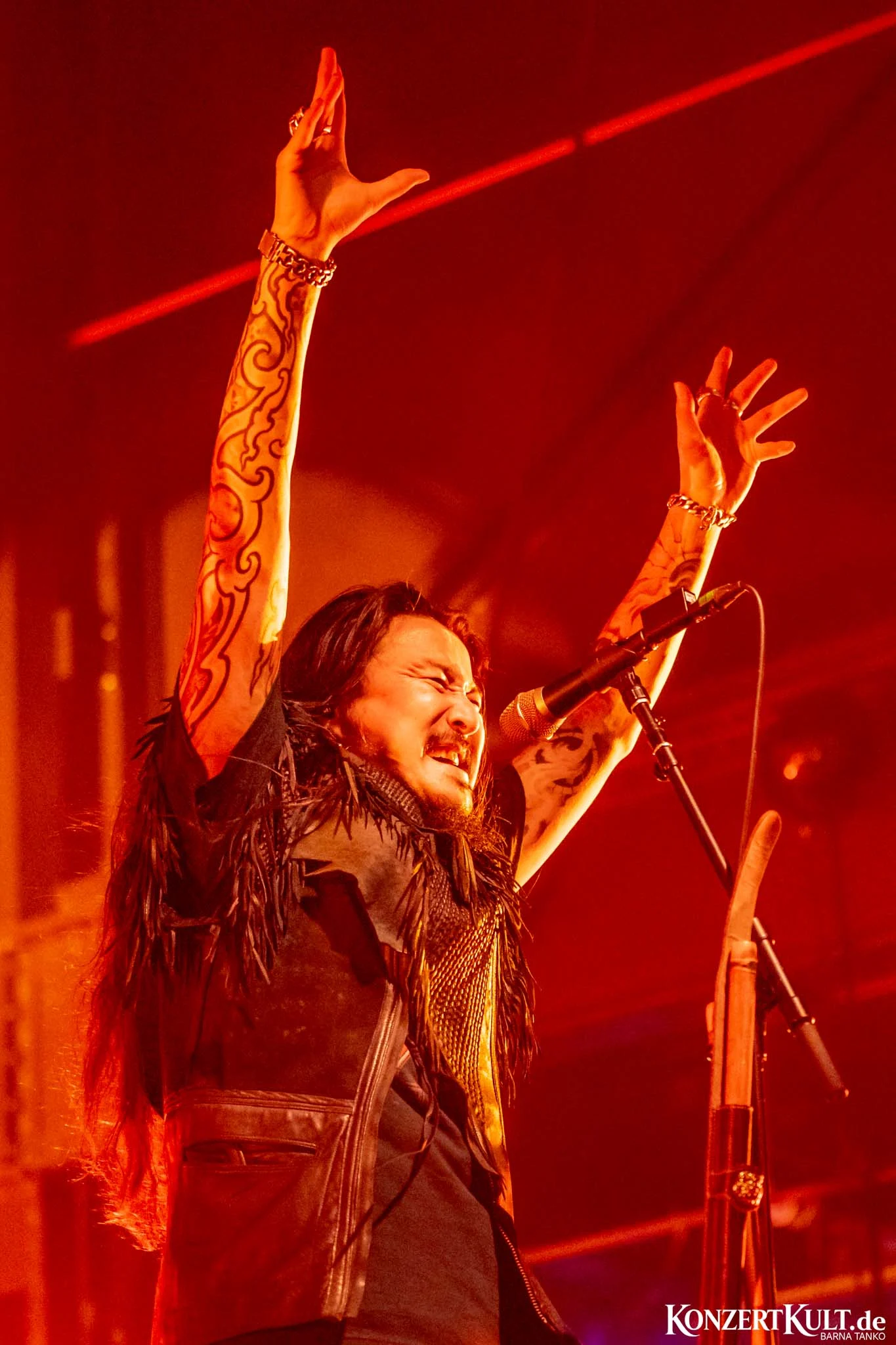
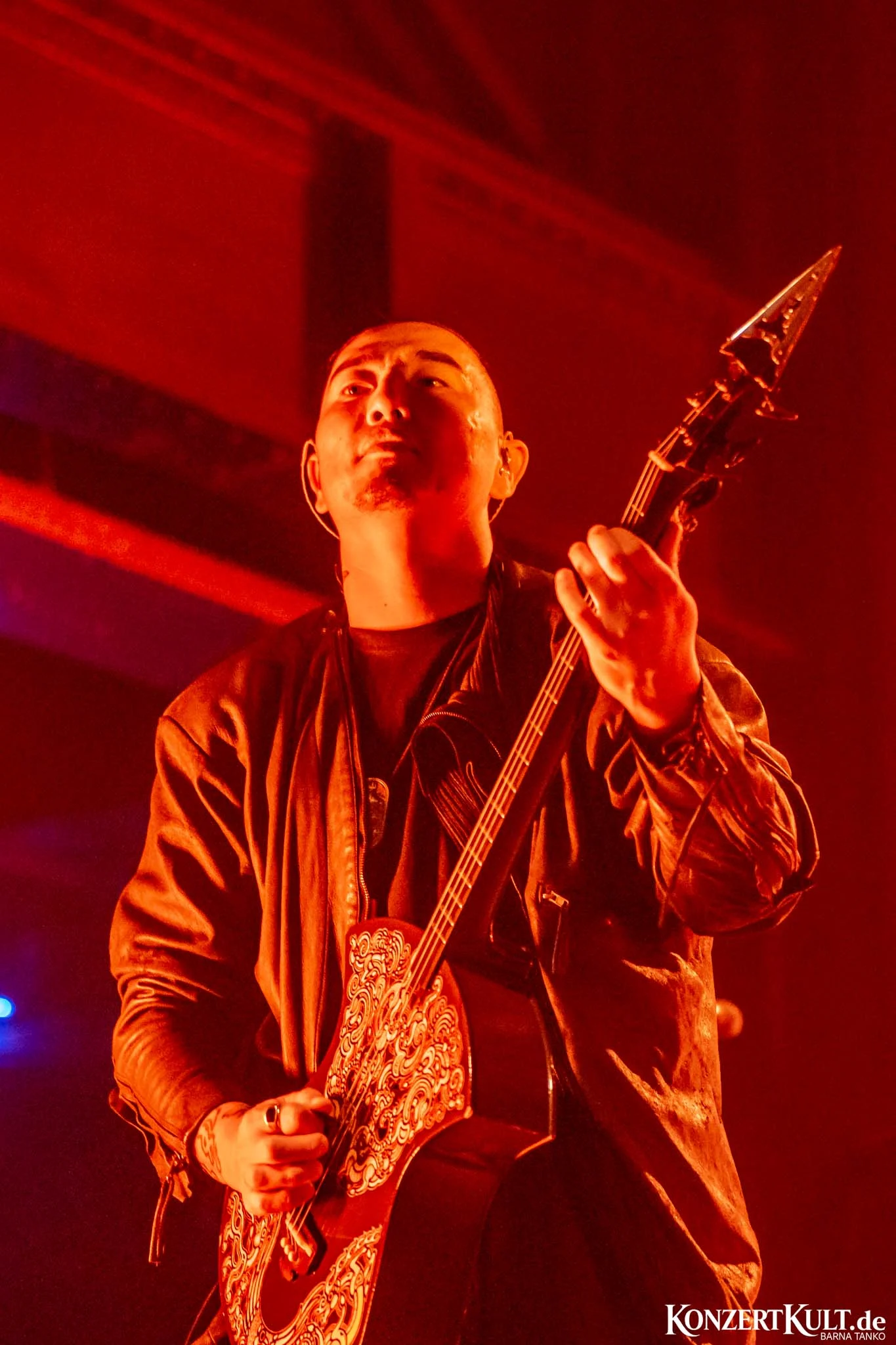
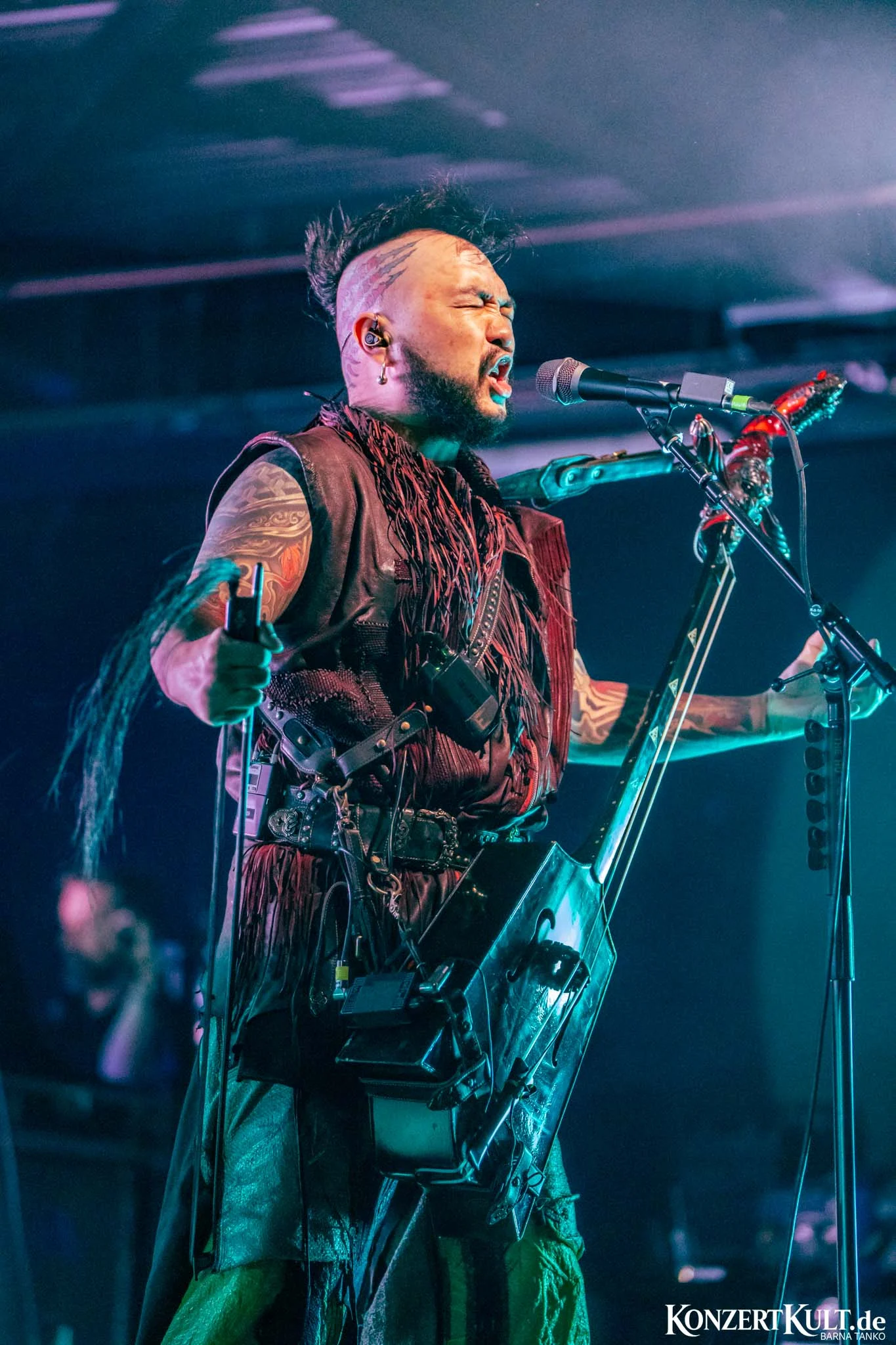
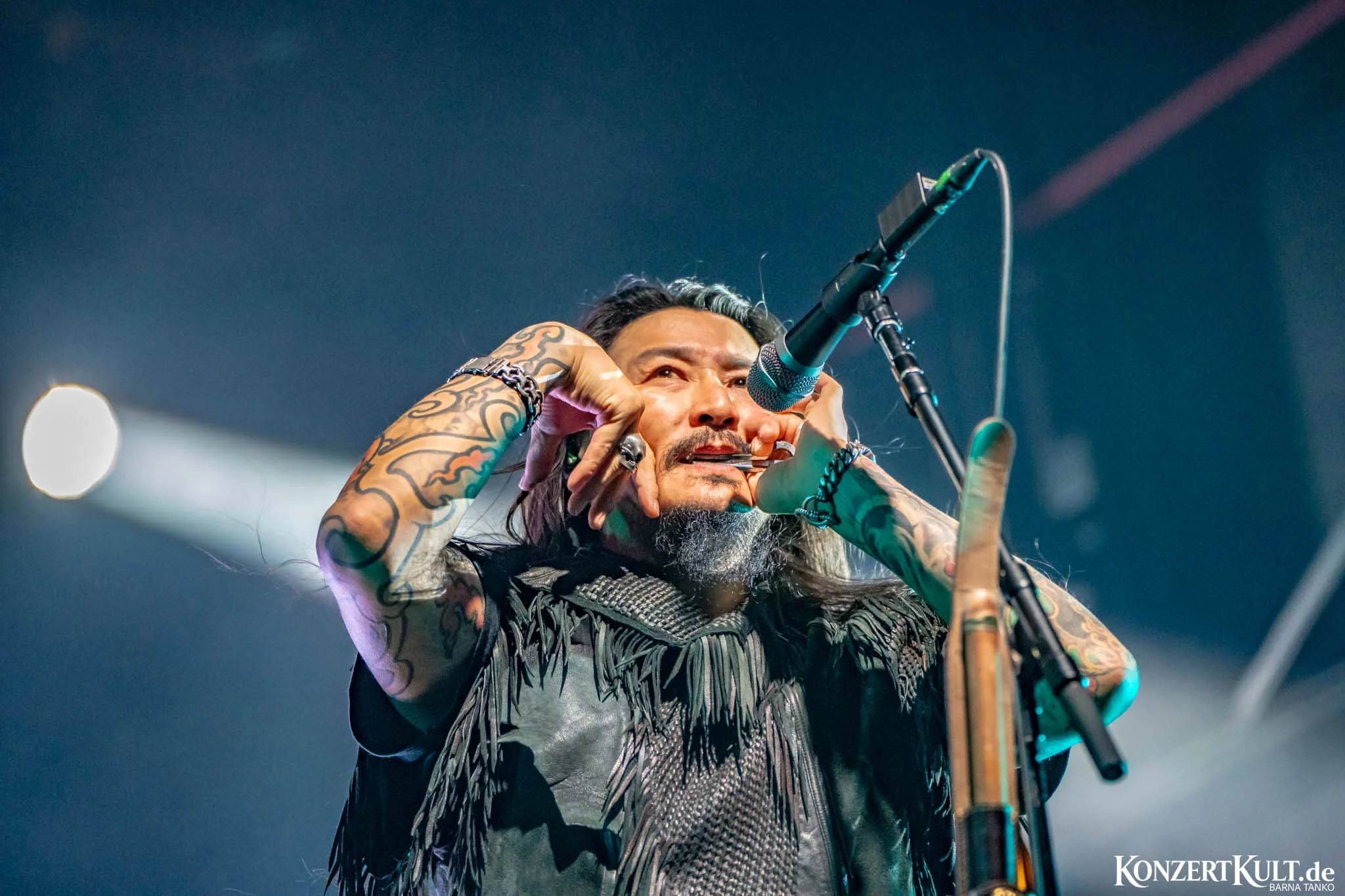
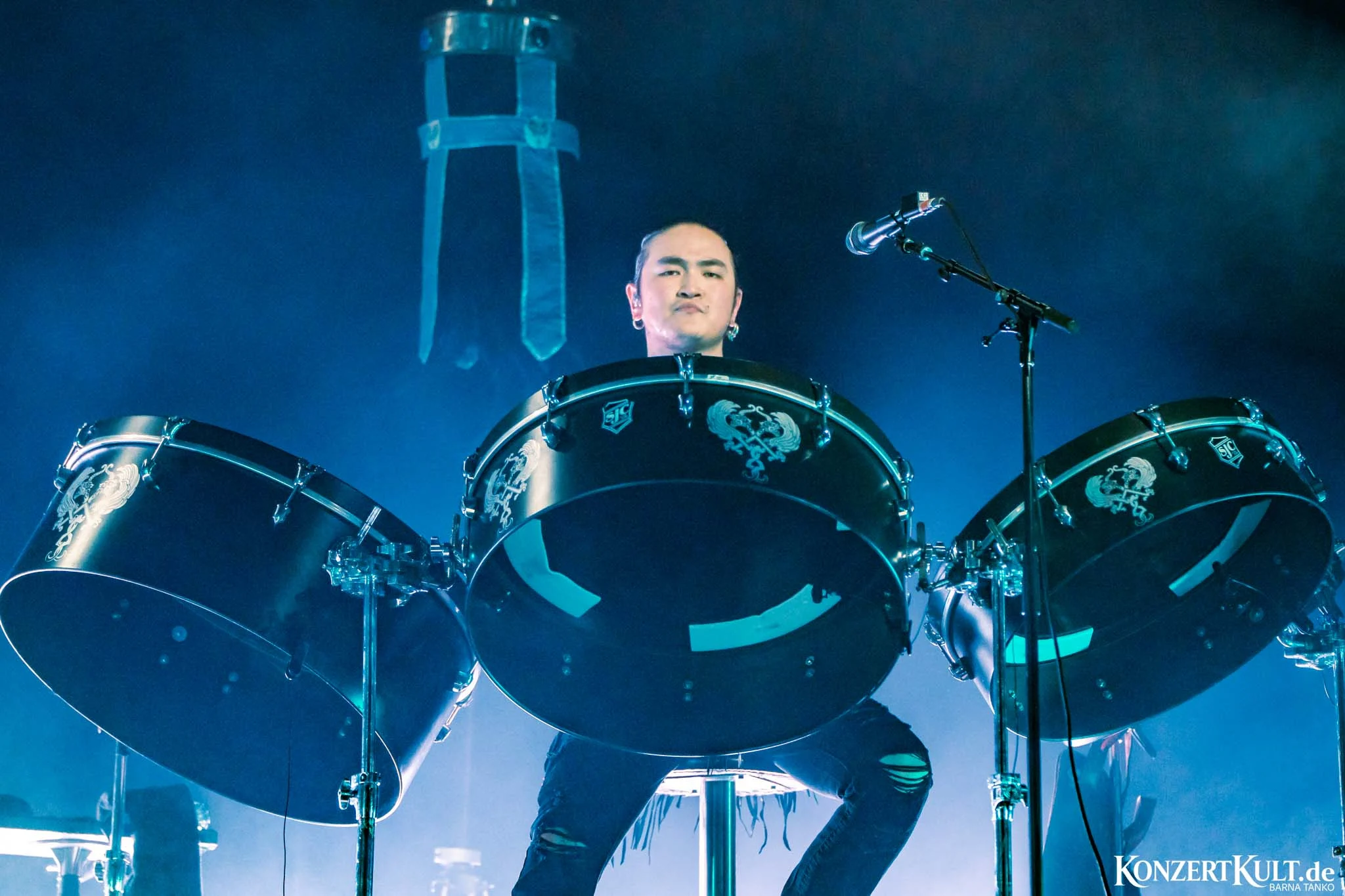
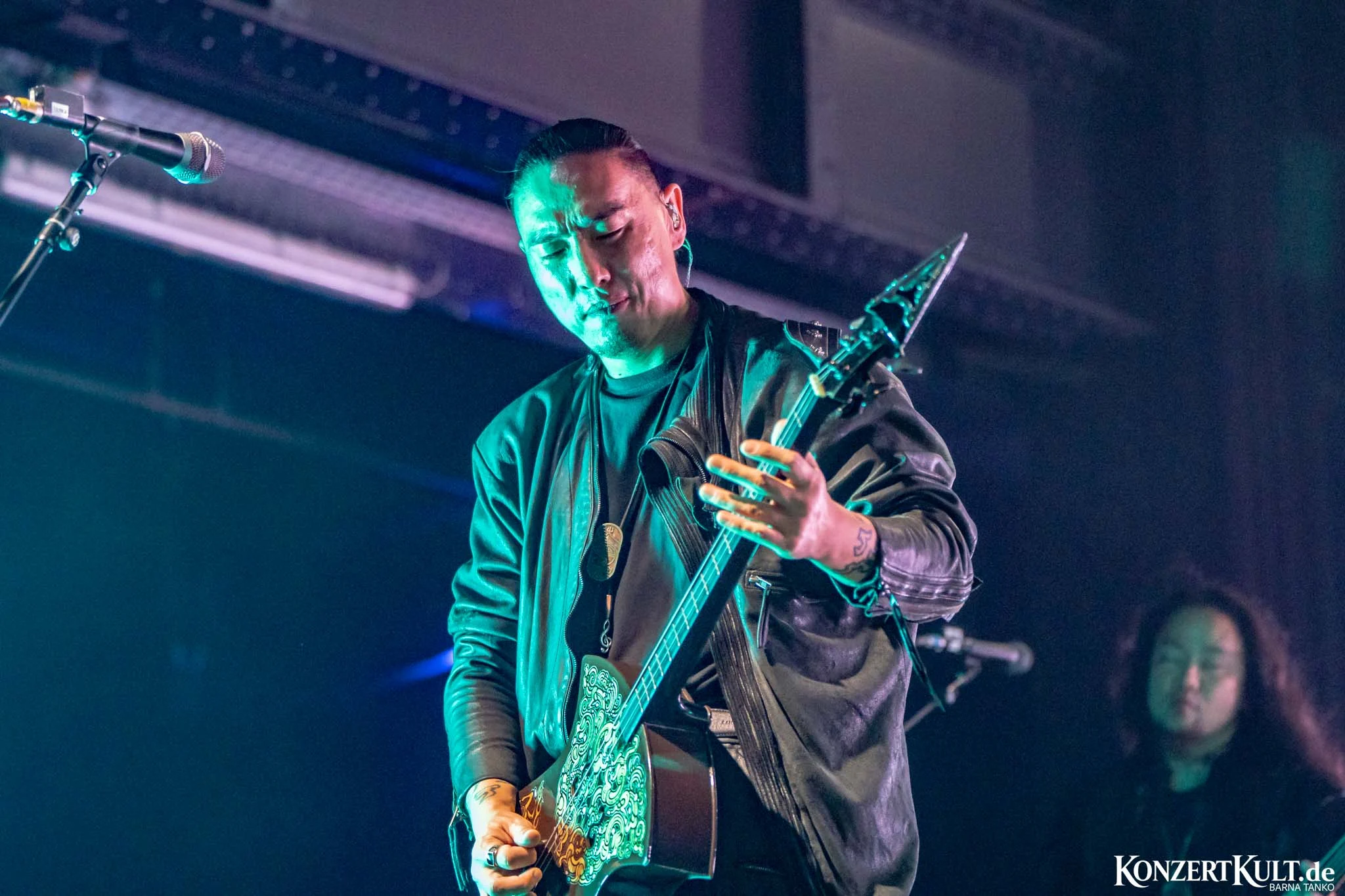
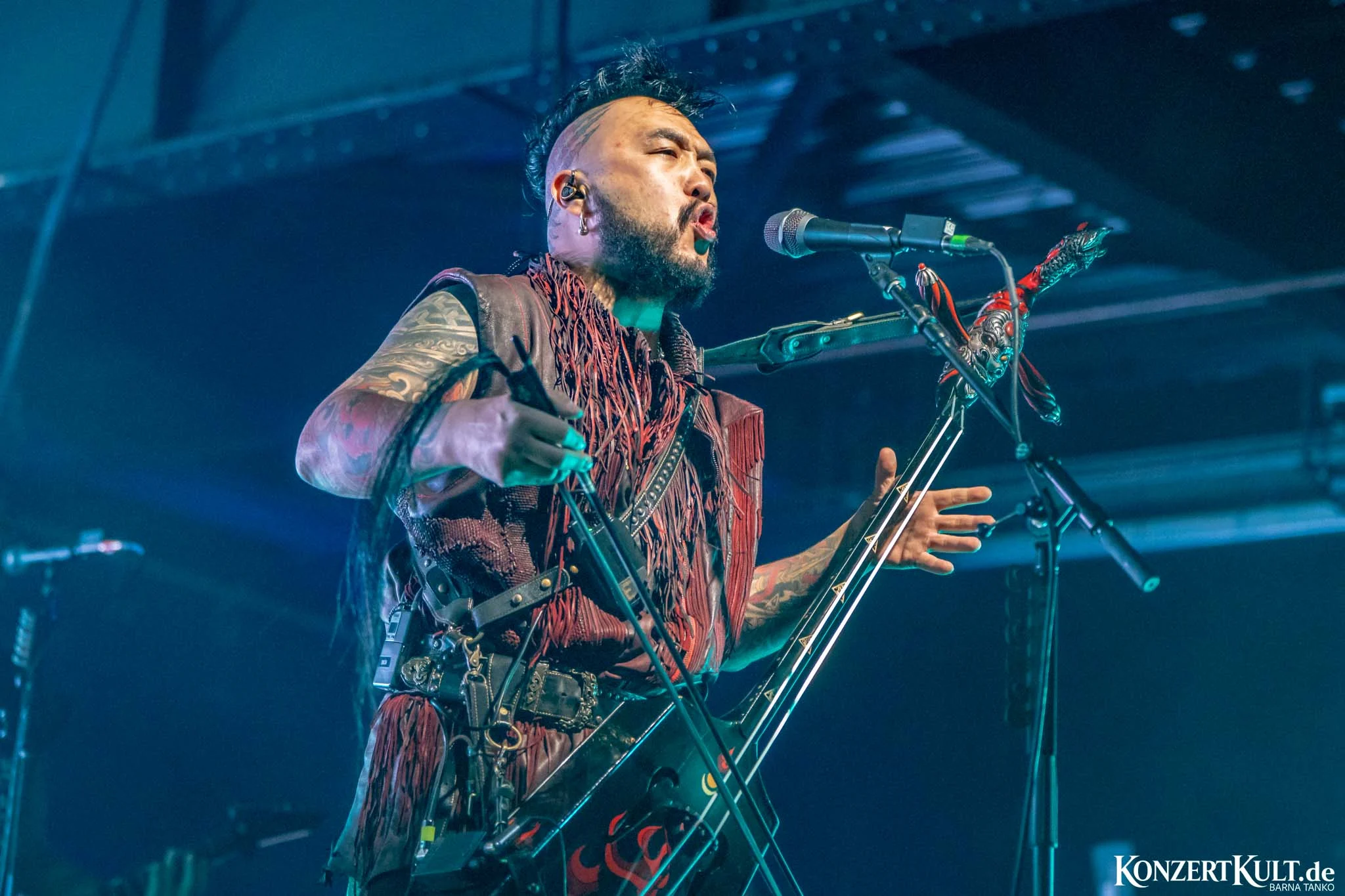
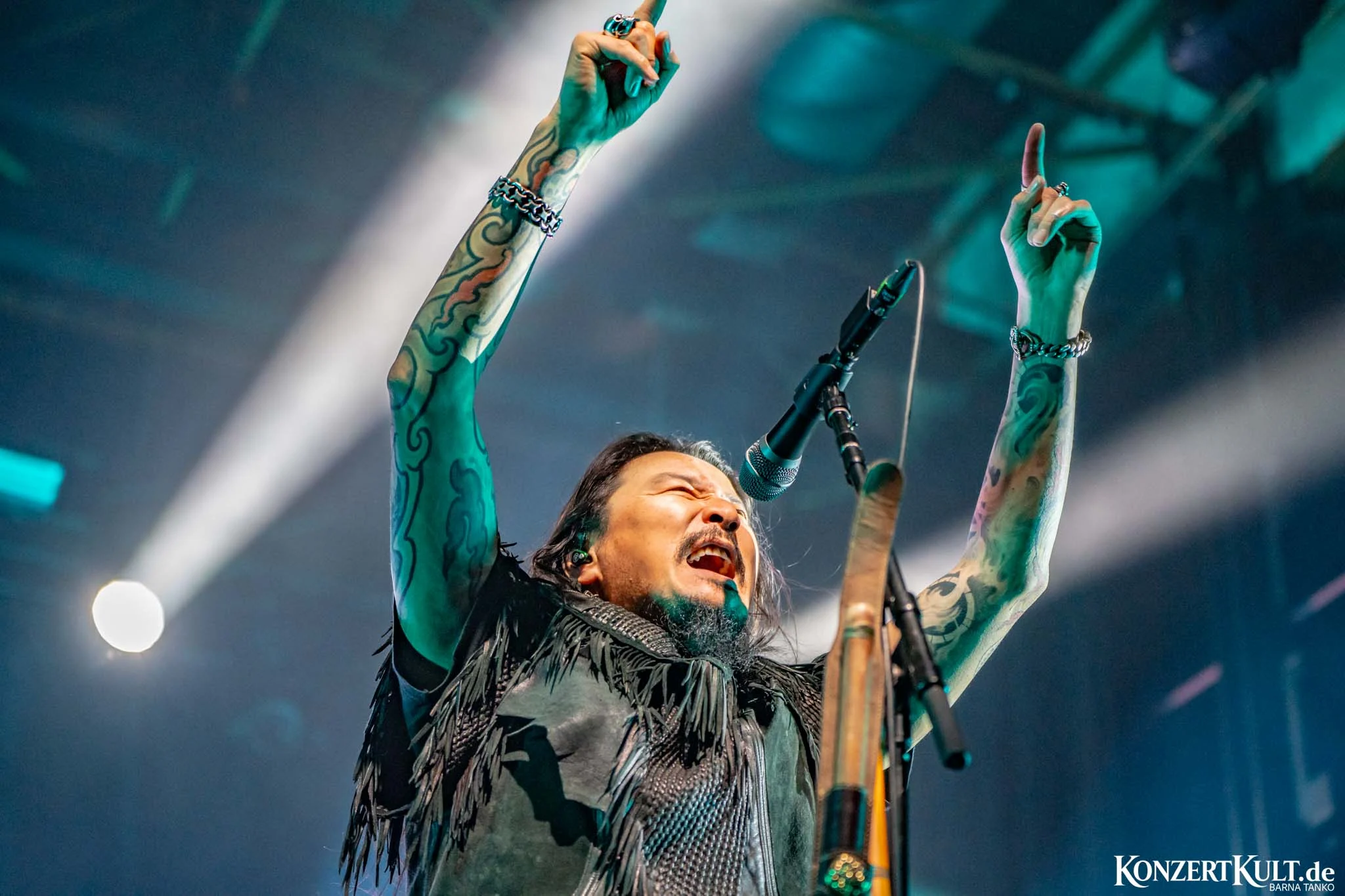
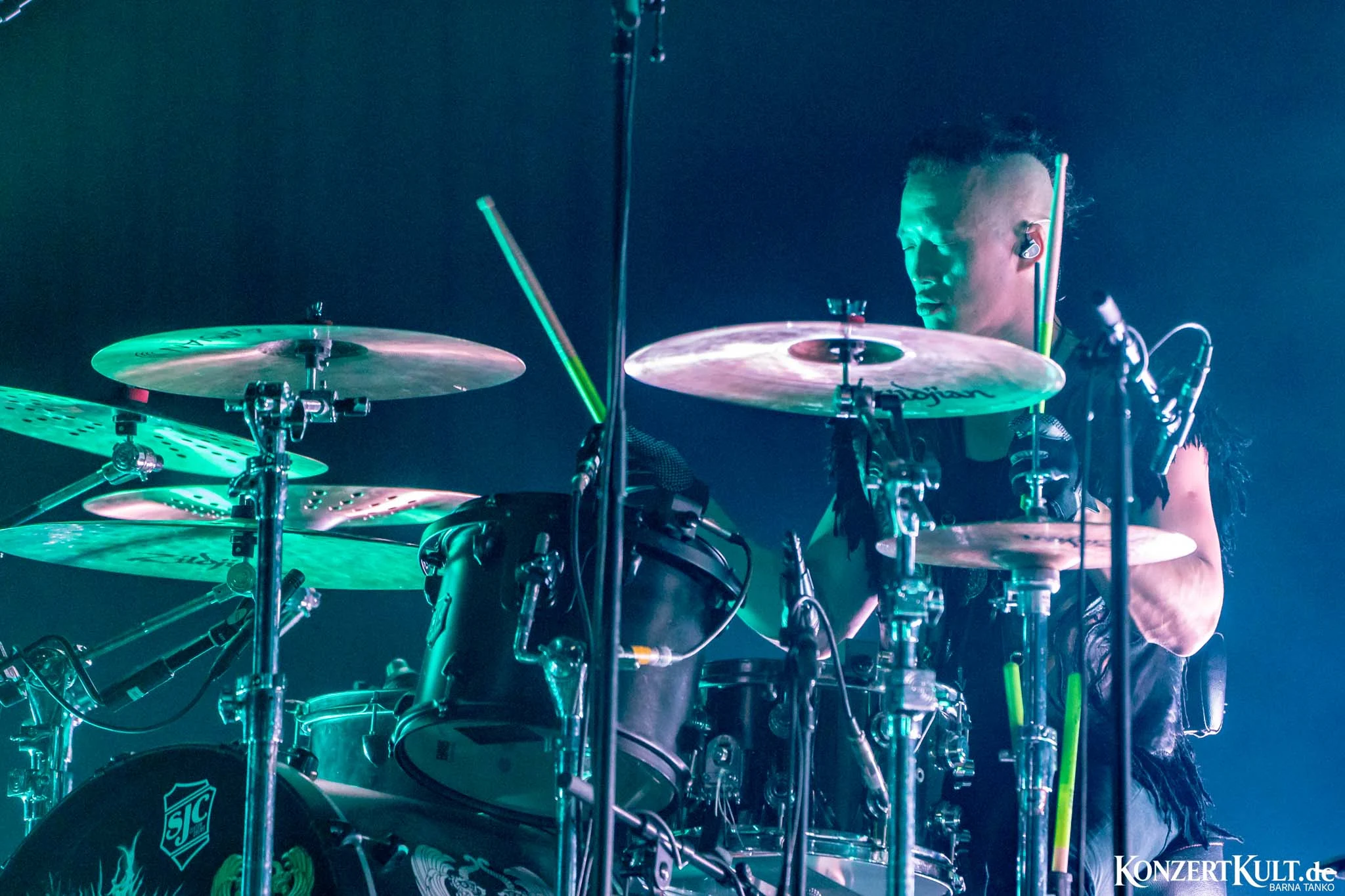
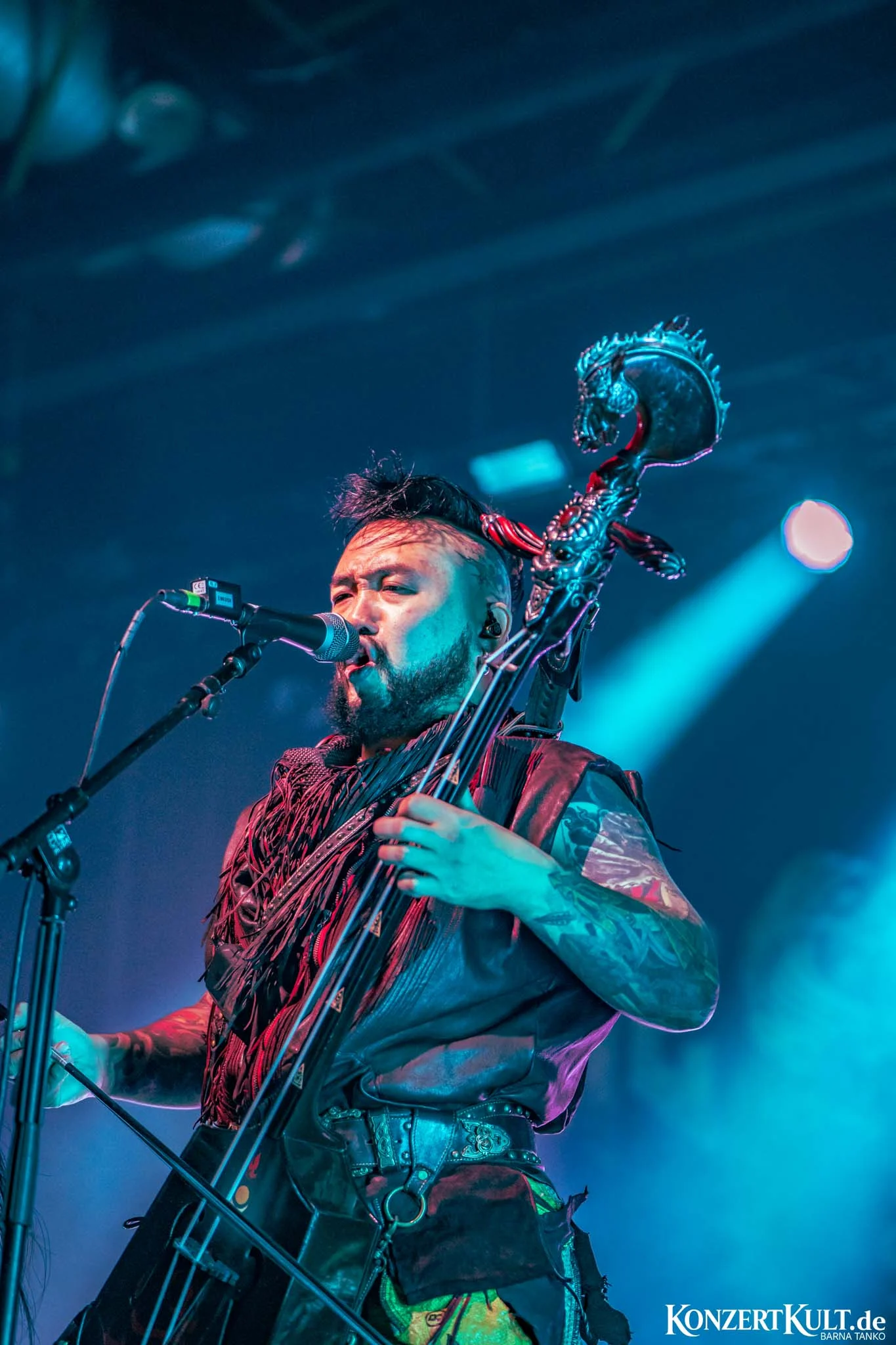
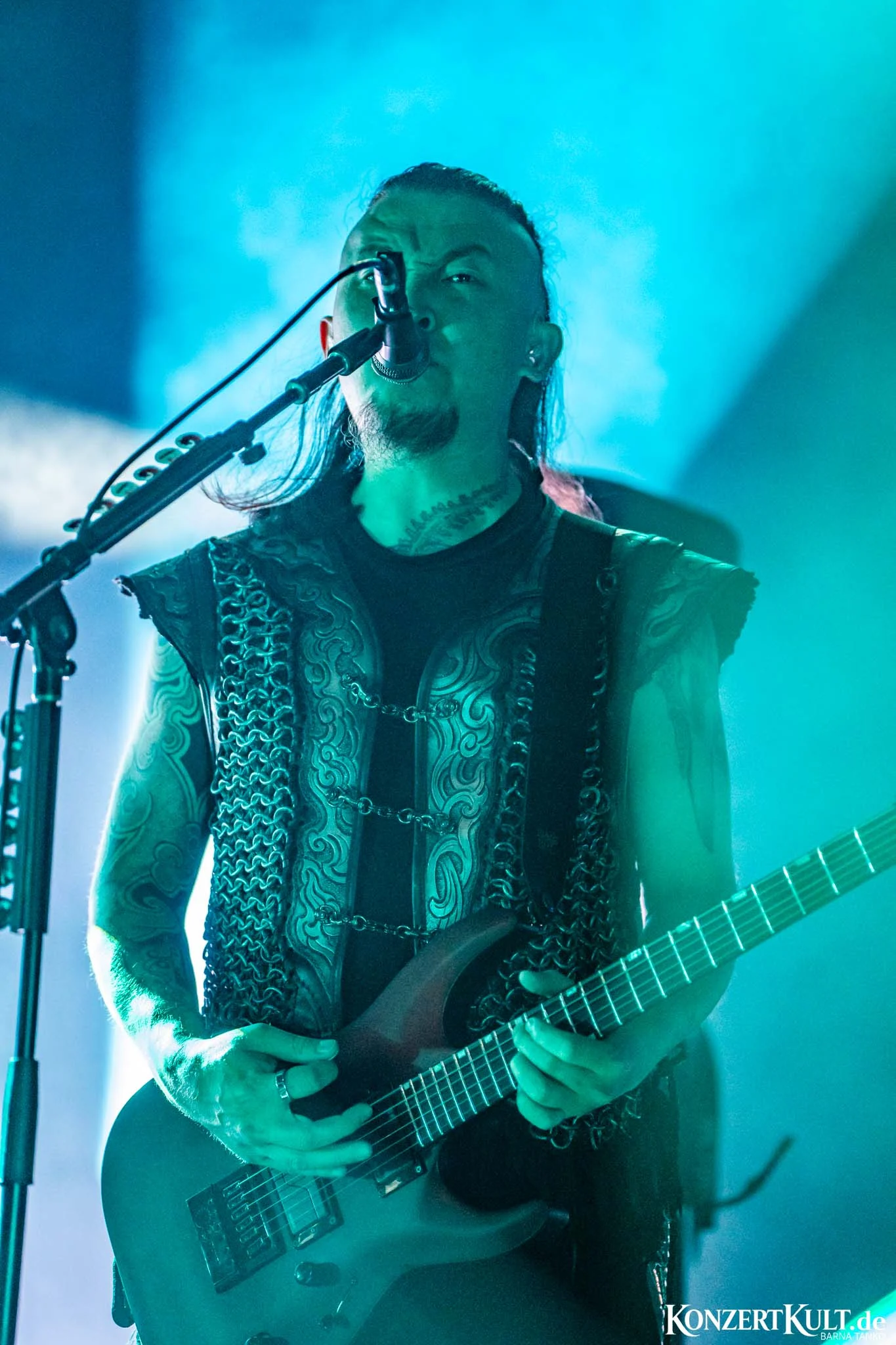
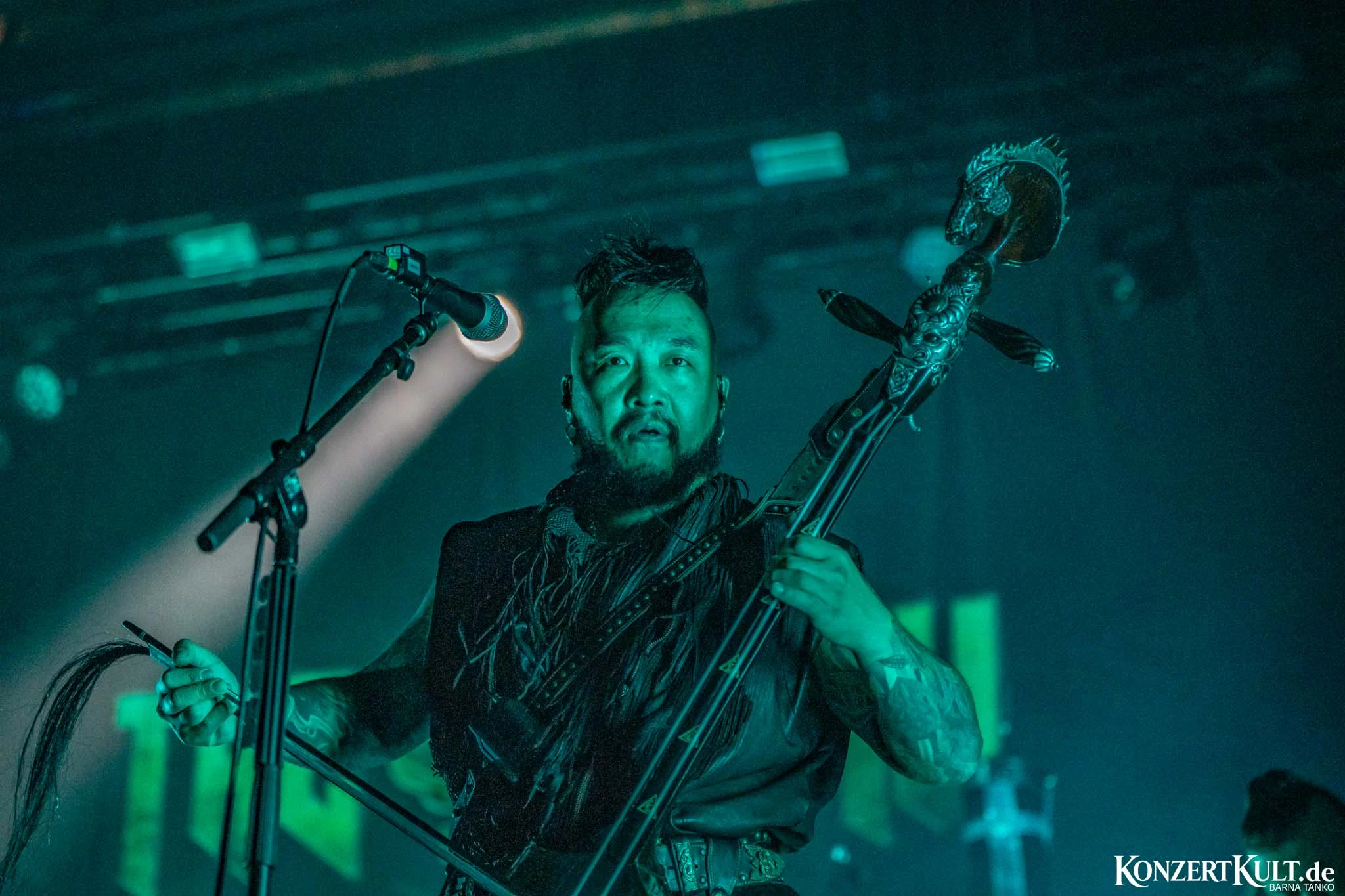
The four core members, Gala, Jaya, Enkush and Temka, combine traditional Mongolian instruments with deep, resonant throat singing. Their traditional instruments produce a sound that is immediately distinguishable from conventional rock instrumentation. The quartet was joined by four additional musicians on guitar, bass, drums and large percussion instruments. They remained largely in the background, with the focus firmly on the four core members at the front of the stage. Communication between songs was minimal: beyond a few “Danke Cologne!” calls and brief introductions, the band let the music do most of the talking. Now and then the core members tapped their bows against their chests in a gesture of gratitude to the audience.
The production was simple: a backdrop with the band’s name, traditional costumes, traditional instruments, and a basic light show. There was little stage theatrics. The members stayed mostly rooted to their spots, concentrating on delivering the music.
The songs: Upright Destined Mongol, The Men, Shadow, Warrior Chant, Echoes of My Father, Grey Hun, The Real You, Black Thunder, This Is Mongol, Yuve Yuve Yu and of course Wolf Totem to name some. For the encore Iron Maiden’s The Trooper got a new interpretation in The Hu’s style.
The metal elements are built on relatively straightforward rock structures, with distinct stylistic similarities to Metallica. The sound was heavy, with a thick rhythm foundation interacting with traditional strings, powerful percussion and layered, guttural vocals, sometimes delivered by several musicians at once. All in all, this was a heavy metal concert with a Mongolian flavour. The rhythm section and beefy, distorted guitars are more dominant today than in the band’s early days.
The result is muscular and occasionally melancholic, an unusual mix of ancient character and modern heaviness. Rather than simply adding traditional instruments to a rock arrangement, The HU have built their musical identity around the interplay between the two.
The sound mix was excellent. Nothing was drowned out, and the bass and drums drove the music without sliding into the sub-woofer-style rumble many newer bands rely on.
Mongolia may seem far removed from the conventional history of heavy metal, but the musicians grew up listening to Western rock and metal, including Metallica. The HU’s success shows that music needs no English lyrics to connect with audiences around the world. Their combination of cultural identity, musicianship and sheer sonic power has proved remarkably effective. The evening was a reminder that some music can be understood without understanding a single word. You simply have to experience it live.
Accreditation: FKP Scorpio