Frank Zappa’s cynical heir? Cake’s minimalist answer to musical satire.
Frank Zappa was arguably the undisputed king of cynical, razor-sharp musical satire. But Zappa has been gone for decades. When CAKE formed in Sacramento, California, in August 1991, they emerged from a very different musical world—yet they seemed to pick up one particular part of Zappa’s legacy and carry it forward: the use of deadpan humour, social observation and musical understatement to expose the absurdities of modern life.
Zappa frequently rejected conventional pop-star emotionalism, favouring theatrical detachment, spoken passages and deliberately unconventional vocal performances. Cake frontman John McCrea similarly became known for his distinctive monotone, rhythmic spoken-singing. Neither vocalist relies heavily on the traditional rock-star approach of emotional belting and dramatic self-expression. Instead, both often sound like “satirical narrators observing human behaviour from a slight distance”.
Zappa spent much of his career skewering American consumer culture, corporate greed, social conventions and the contradictions of counterculture. Cake built a substantial part of its identity around similar targets. Songs such as “Rock ’n’ Roll Lifestyle” take aim at the commercialization and posturing surrounding rock culture, while “Comfort Eagle” turns its attention toward consumerism, corporate culture and the pursuit of status. The humour is dry rather than cartoonish, and the criticism is often delivered so casually that the joke can initially pass almost unnoticed.
Musically, however, the two could hardly be further apart.
Zappa was essentially a composer operating inside rock music. His work could be extraordinarily dense, moving between rock, jazz, classical music, doo-wop, blues and avant-garde experimentation, often within the same composition. Complex arrangements, irregular rhythms, instrumental virtuosity and sudden stylistic shifts were fundamental parts of his vocabulary.
CAKE went in almost the opposite direction. Their music is built around minimalism, space and precision: tight rhythm sections, economical guitar parts, understated arrangements and McCrea’s unmistakable vocal delivery. Where Zappa could fill every available sonic space, Cake often seemed to deliberately leave space around the individual instruments.
Zappa used musical excess to expose absurdity. Cake often uses musical restraint to do the same thing.
So Cake certainly isn’t a musical continuation of Zappa in any literal sense. They didn’t inherit his sprawling jazz-rock compositions, orchestral ambitions or virtuoso instrumental architecture.
But if Zappa’s larger artistic project is understood as “using music, humour and satire to hold a mirror up to society”, Cake makes an interesting case as one of his more successful spiritual descendants. They stripped away the complexity and maximalism and replaced it with something almost the opposite: a minimalist alternative-rock framework in which the lyrics and deadpan delivery do much of the heavy lifting.
At 8 p.m., a prerecorded message came through the speakers in several languages, greeting the crowd before delivering a very clear warning:
“Photography and filming strictly forbidden, and anyone caught doing so would be removed from the room.”
This immediately set the tone for what followed. This was going to be a show about being present, not documenting every second of it.
And perhaps that was fitting for CAKE.
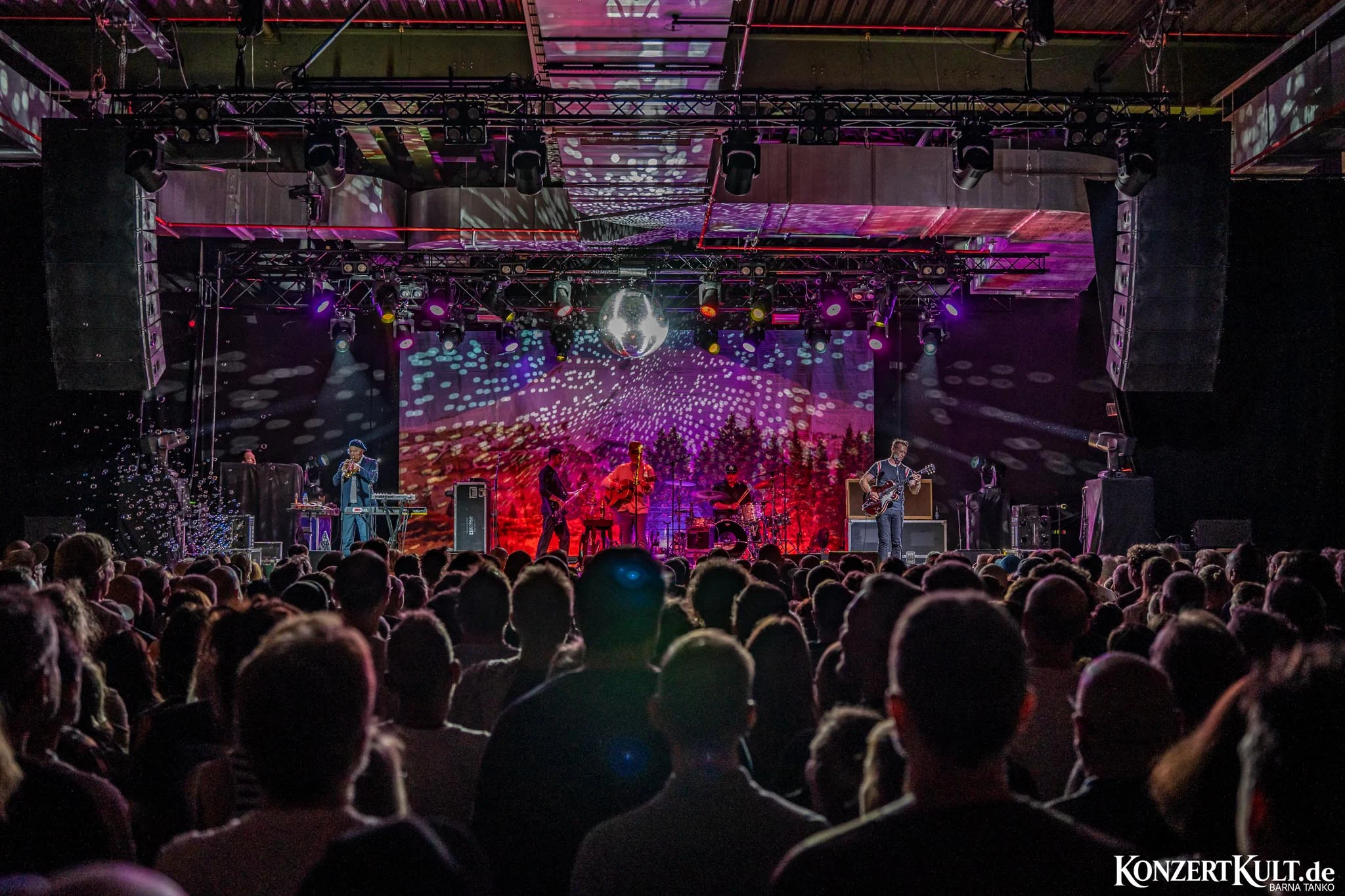
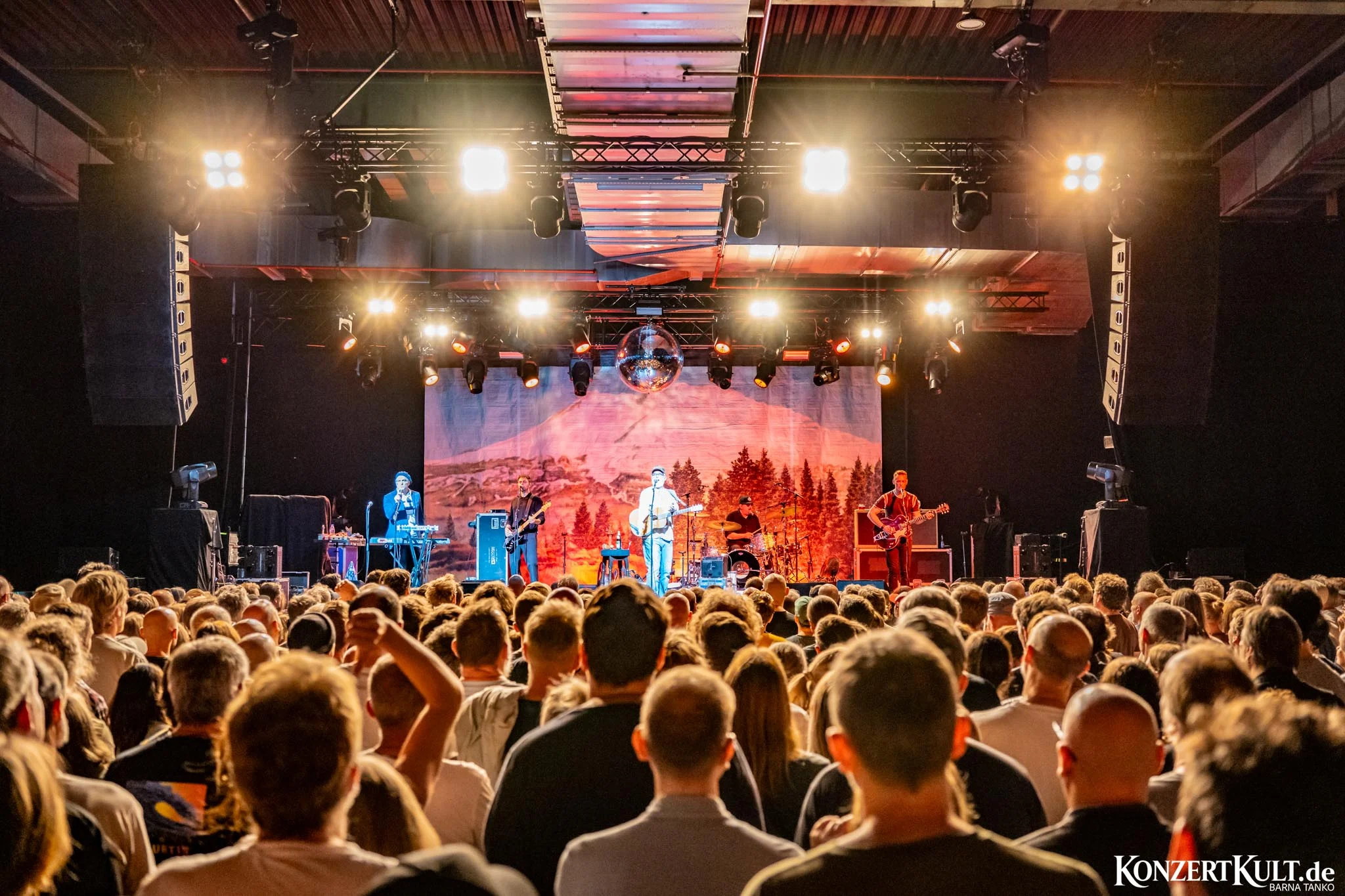
By the time the Sacramento band took the stage at Cologne’s Carlswerk Victoria, the room was packed with an unusually broad age range, from people in their early 20s to well over 60. The temperature rose quickly, turning the sold-out venue into a sweaty environment before the night was over.
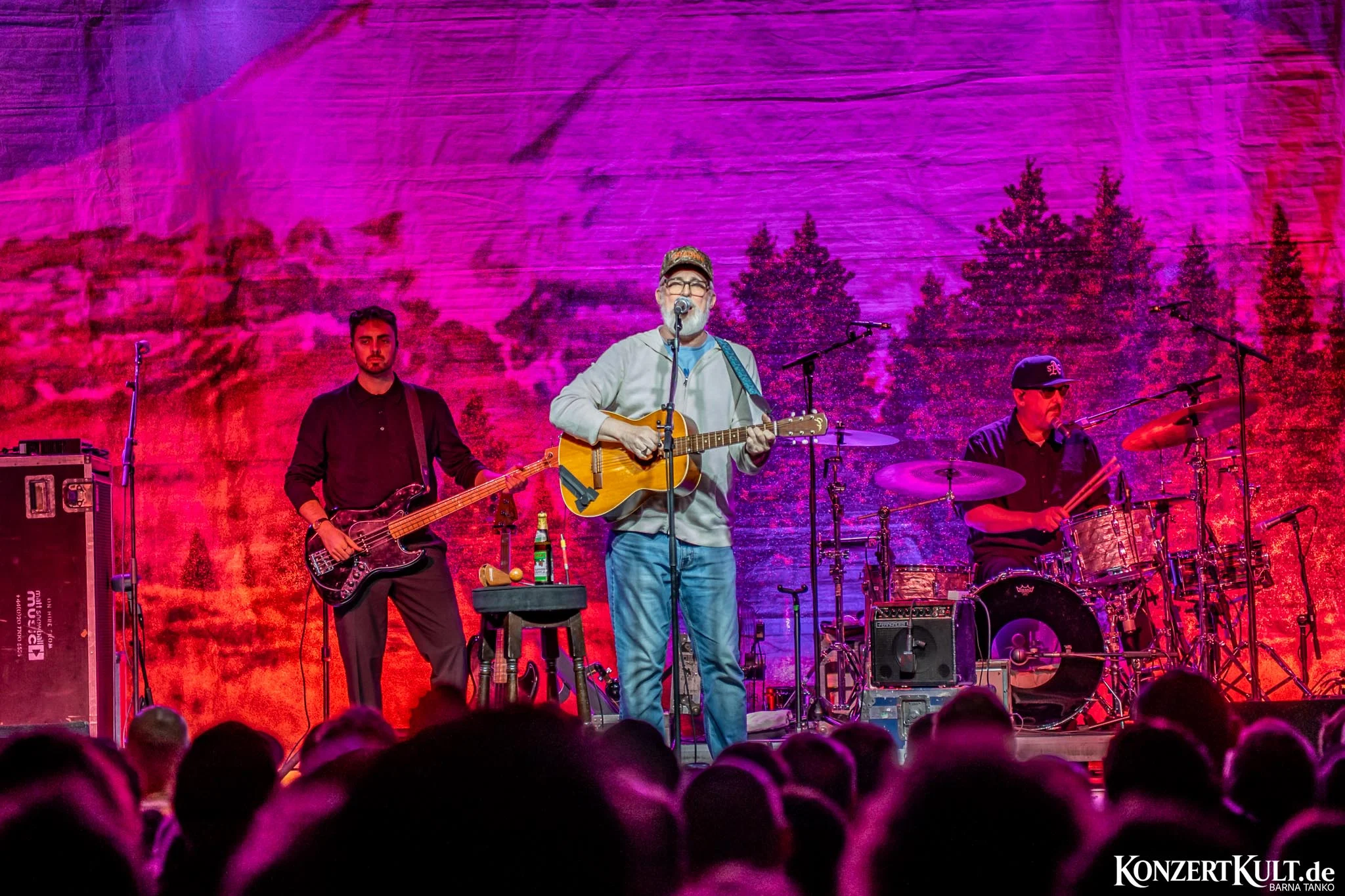
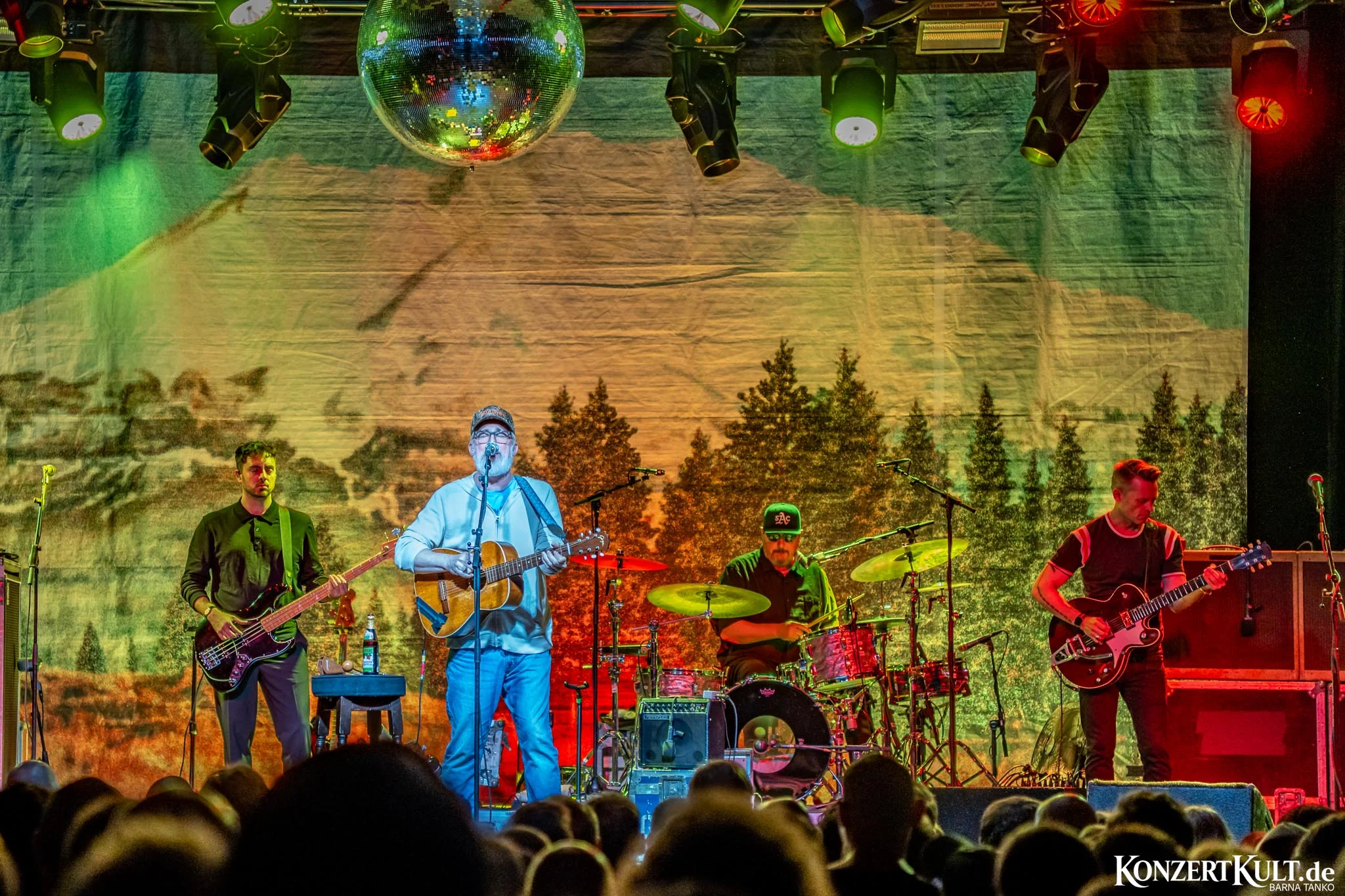
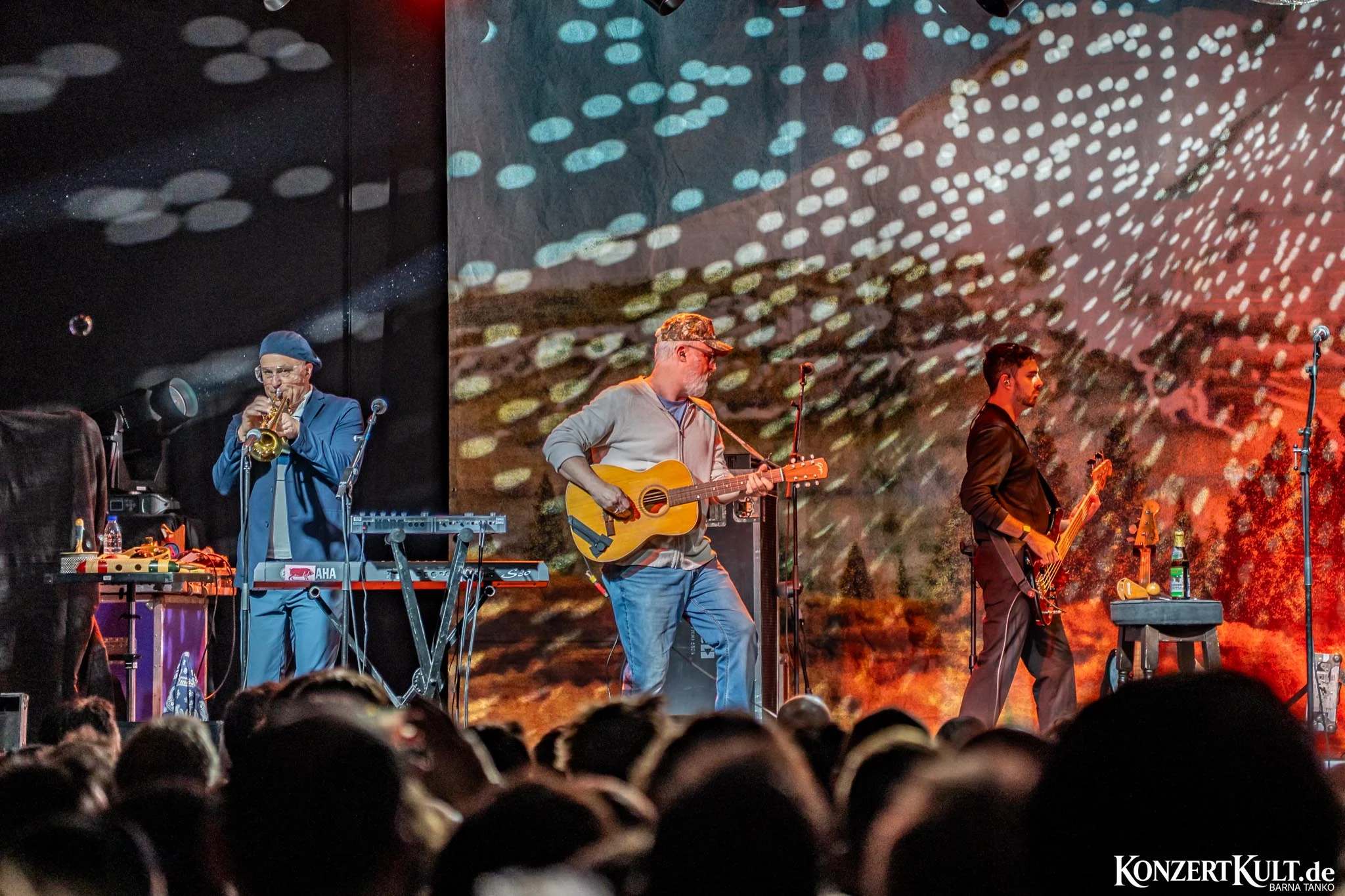
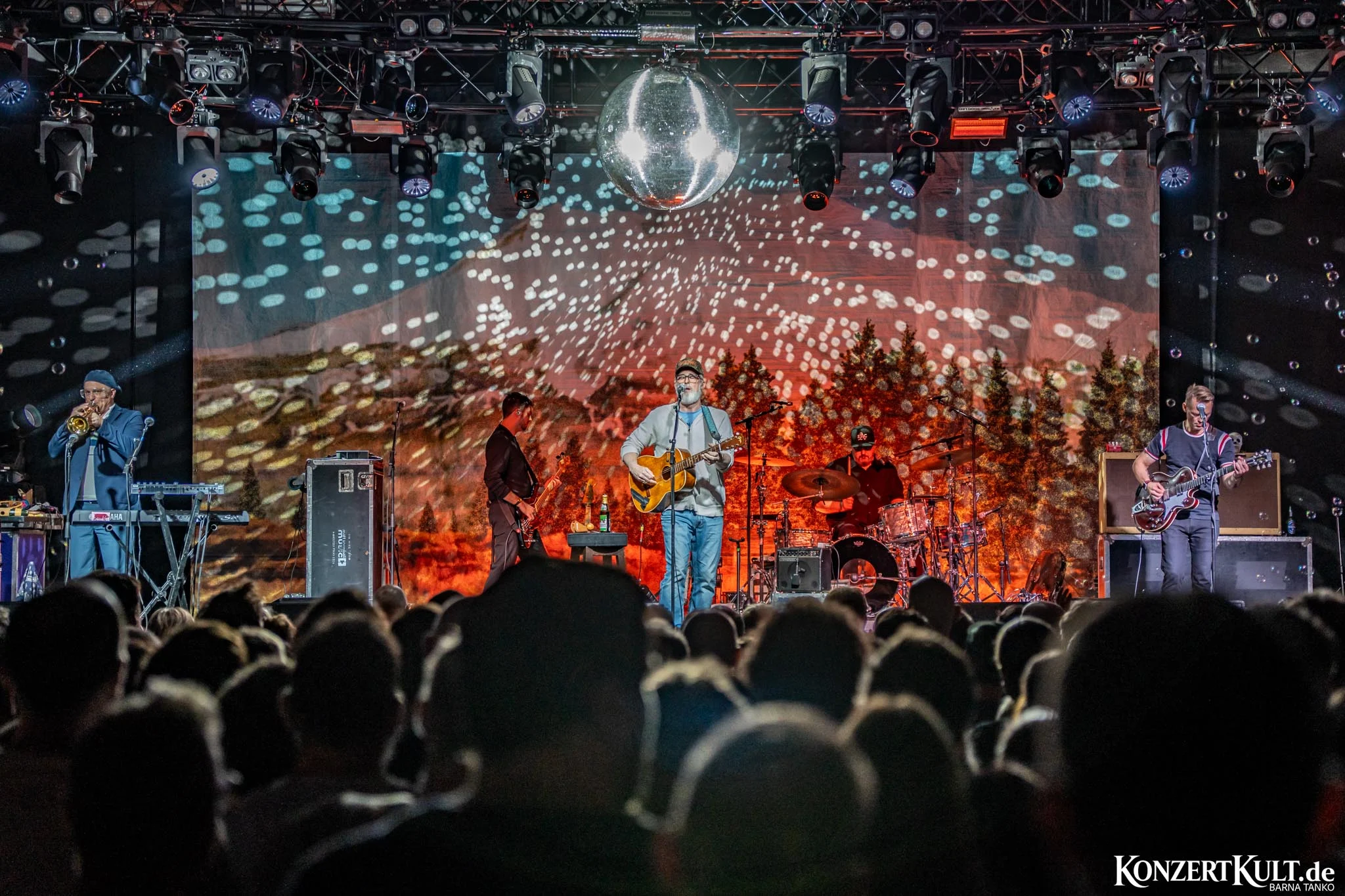
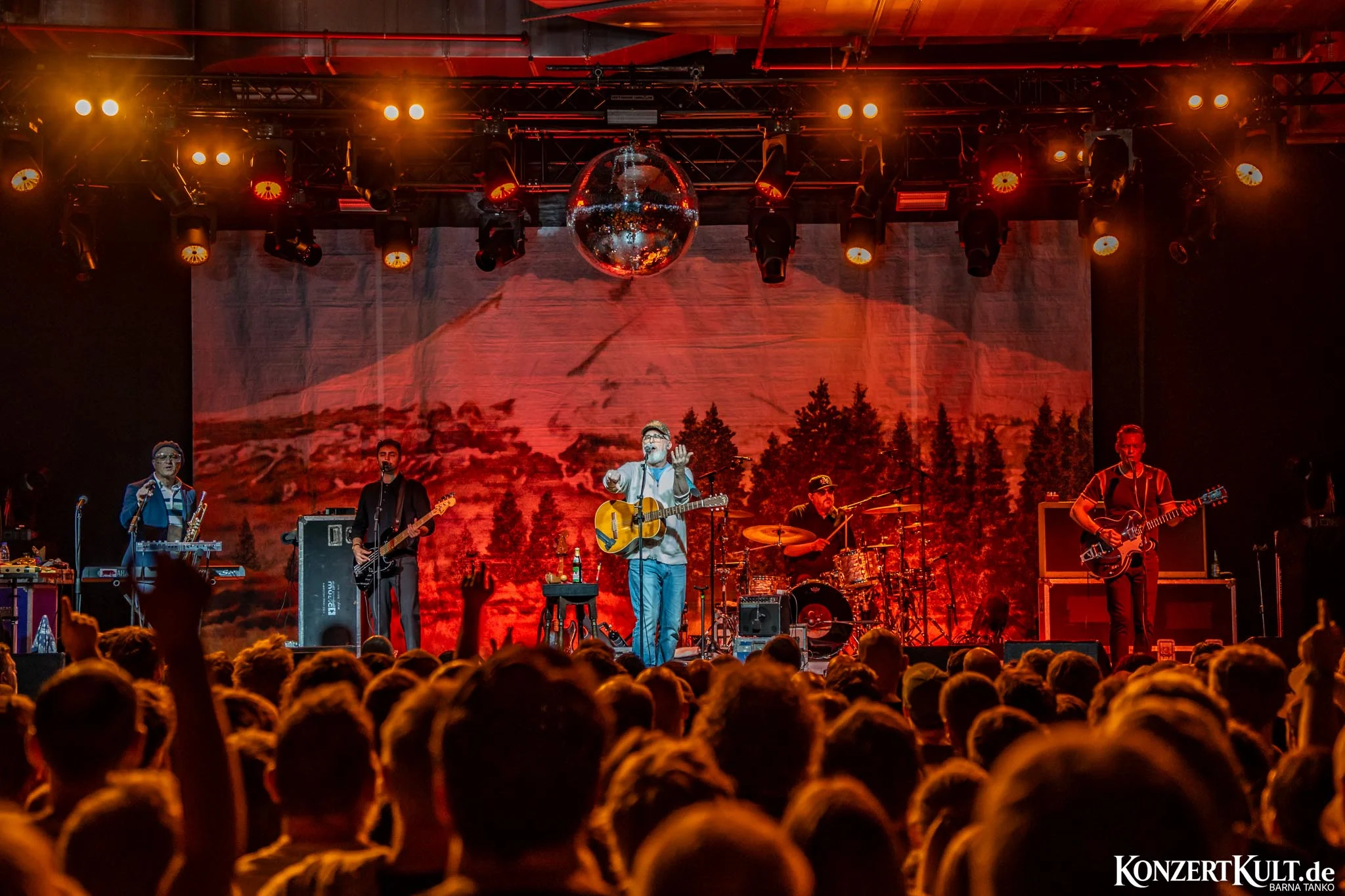
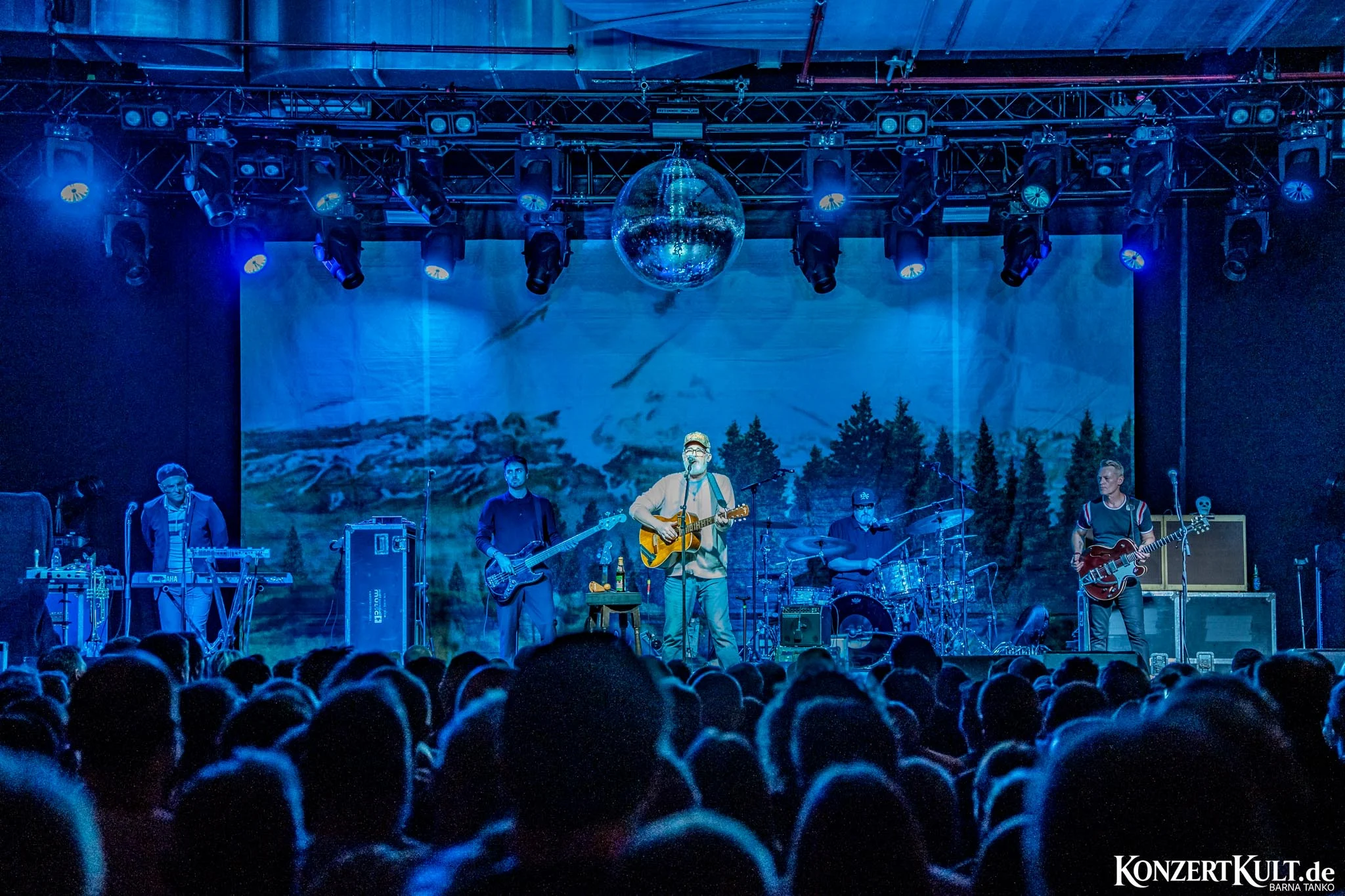
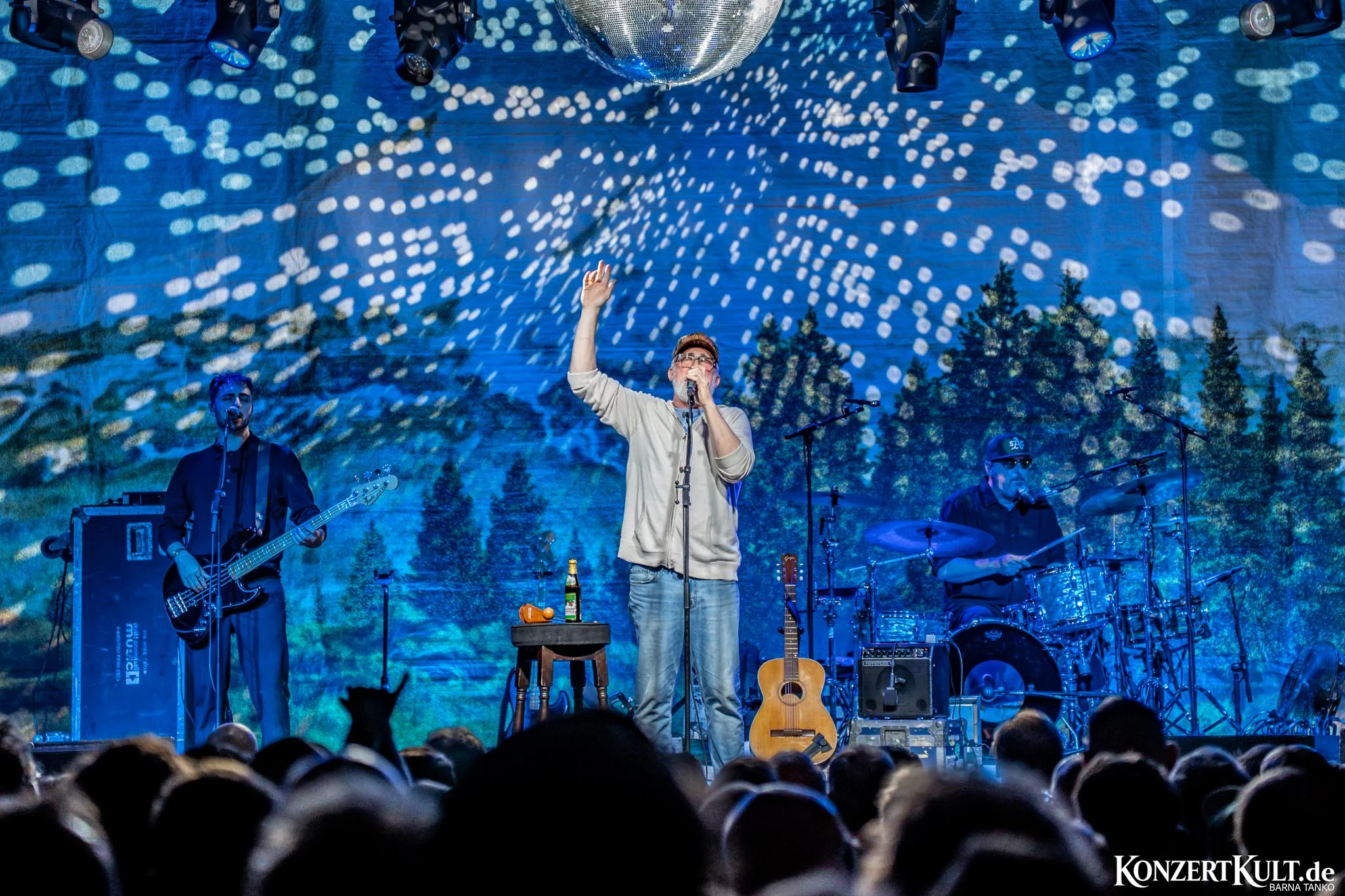
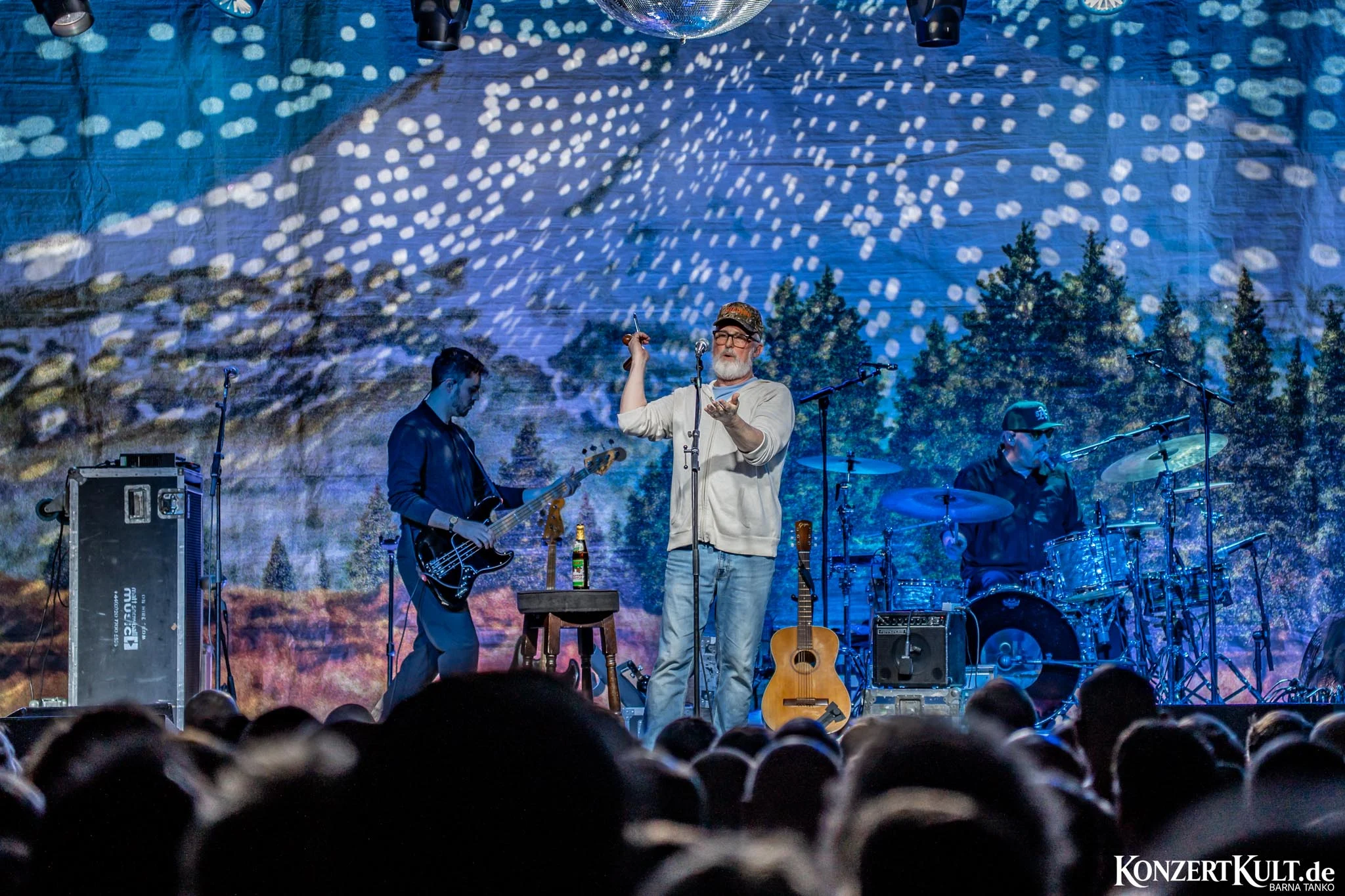
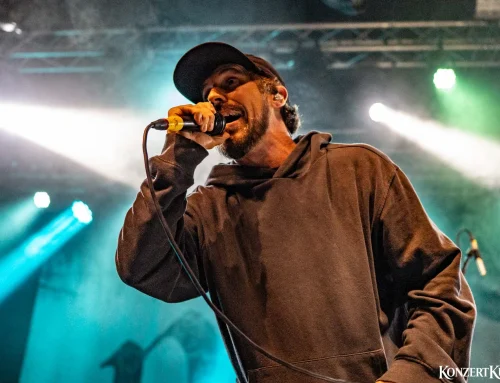
After pre-recorded lengthy instrumental opener, the five pice band took stage and frontman John McCrea appeared with a beard as white as snow. His voice is noticeably deeper and lower than on the band’s early recordings. Yet his dry delivery, playful sense of humour and unmistakable stage presence remained firmly intact.
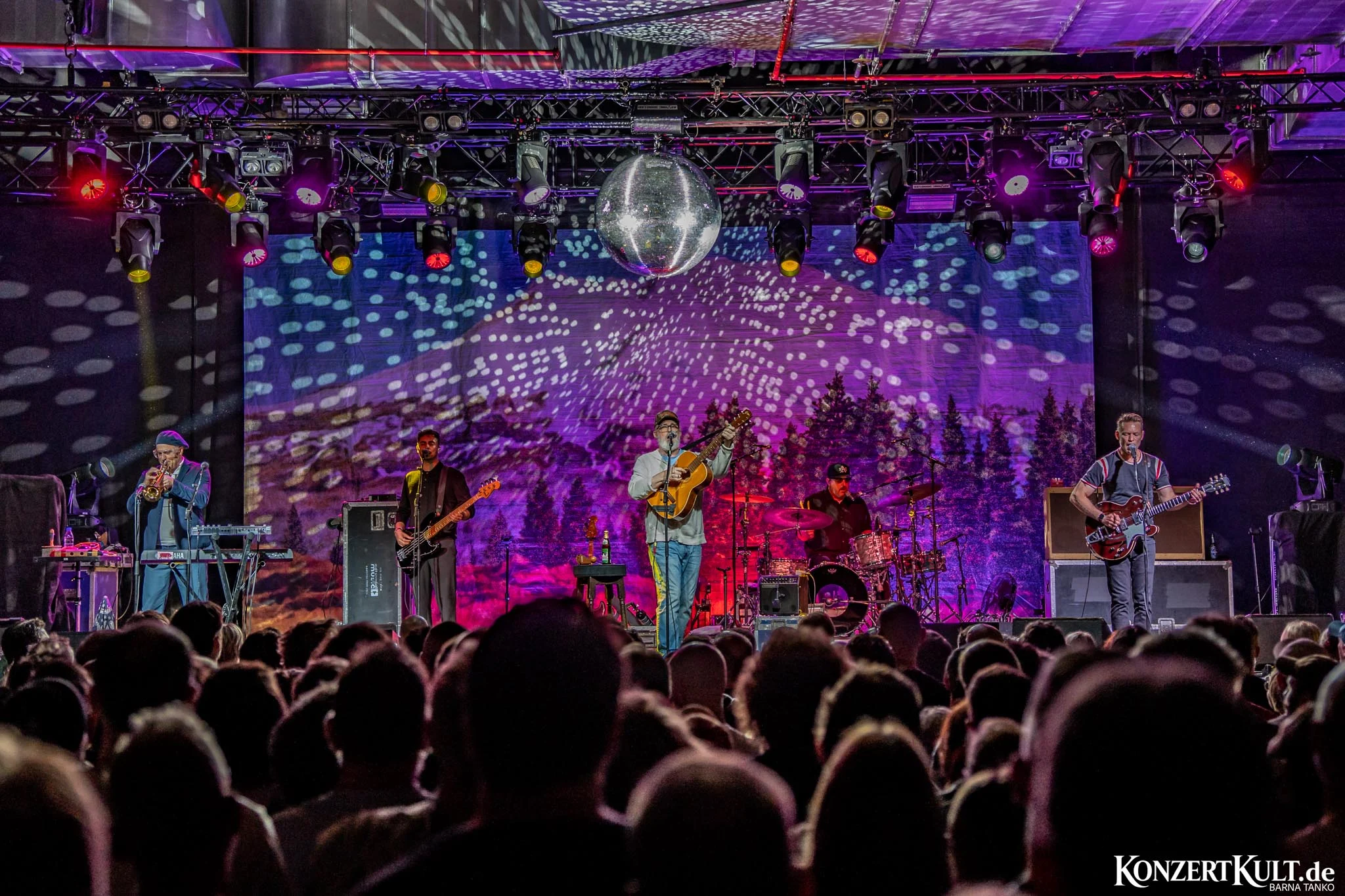
CAKE’s concerts have their own established formula, and there was little interest in reinventing it. A large rotating disco ball, a printed mountain landscape backdrop and no band name on display. Twinkling lights and bubble machines provided the visual spectacle, while McCrea’s banter filled the spaces between songs. There were no elaborate video screens, surprise guests or unnecessary production tricks. Just the band, their songs and an audience that knew exactly what it had come to hear.
The band opened with a seven-song first set that lasted roughly an hour, moving effortlessly between alternative rock, country, funk and Mexican folk influences. McCrea’s vibraslap appeared at precisely the right moments, while Vince DiFiore’s trumpet and melodica remained central to the band’s unmistakable sound.
Songs such as “Rock and Roll Lifestyle”, “Never There” and “Stickshifts and Safetybelts” demonstrated just how well CAKE’s stripped-down musical identity has aged. In fact, some of the songs sounded even better live than on their studio recordings, with the band’s loose, organic approach giving them an additional dimension.
The Cologne audience enthusiastically joined in on old favorites, including”Sheep Go To Heaven,” while a T-shirt made its way into the crowd. CAKE also continued its tradition of turning the concert into something slightly more theatrical without ever making it feel overproduced.
As for the sound itself, the volume was just right for the concert experience—loud enough to feel the energy of the live performance without being overdone. There was no need for earplugs, and the balanced levels allowed the vocals to come through cleanly and clearly, with every word fully understandable.
Roughly around 8:40 p.m., McCrea announced that he was going to leave the crowd with a “super negative song” before launching into “I’m So Sick of You.” What could have been a straightforward performance became another McCrea trademark: he divided the audience by drawing an imaginary line down the middle and turned the song into a playful singing competition between the two sides.
Then came the intermission.
CAKE traditionally structures its shows as two sets, giving the evening a somewhat old-fashioned concert format that has largely disappeared from modern touring. The breaks are also allowing the band to stage another of its traditions—the tree giveaways—while giving the overheated audience a chance to catch its breath.
The second set brought more familiar territory, including “Short Skirt/Long Jacket” ,”The Distance” and “I Will Survive.” Bubbles filled the air during songs including “Love You Madly” and “The Distance,” floating beneath the disco ball and creating an almost surreal contrast with the band’s deliberately unfussy presentation.
There was something refreshing about the whole experience. In an era when phones are often held above the crowd throughout an entire concert, CAKE effectively removed that distraction before the first note was played. No screens, no constant recording, no chasing the perfect social-media clip.
Just a room full of people listening to a band.
CAKE didn’t need to manufacture a spectacular moment. Their songs, McCrea’s increasingly deep voice, the vibraslap, DiFiore’s trumpet and melodica, the bubbles and the disco ball were enough.
The show delivered exactly what audiences came for—and nothing they didn’t. No surprise guests. No elaborate graphics. No videos. No unnecessary production.
Just CAKE.
Accreditation: FKP Scorpio
Photos from FOH.